- Infectious Diseases of Livestock
- Part 1
- Theileria taurotragi infection
- Vectors: Ticks
- Vectors: Tsetse flies
- Vectors: Muscidae
- Vectors: Tabanidae
- Vectors: Culicoides spp.
- Vectors: Mosquitoes
- Classification, epidemiology and control of arthropod-borne viruses
- Special factors affecting the control of livestock diseases in sub-Saharan Africa
- The control of infectious diseases of livestock: Making appropriate decisions in different epidemiological and socioeconomic conditions
- Infectious diseases of animals in sub-Saharan Africa: The wildlife⁄livestock interface
- Vaccination: An approach to the control of infectious diseases
- African animal trypanosomoses
- Dourine
- Trichomonosis
- Amoebic infections
- GENERAL INTRODUCTION: COCCIDIA
- Coccidiosis
- Cryptosporidiosis
- Toxoplasmosis
- Besnoitiosis
- Sarcocystosis
- Balantidiosis
- Leishmaniosis
- Neosporosis
- Equine protozoal myeloencephalitis
- GENERAL INTRODUCTION: BABESIOSES
- Bovine babesiosis
- Equine piroplasmosis
- Porcine babesiosis
- Ovine babesiosis
- GENERAL INTRODUCTION: THEILERIOSES OF CATTLE
- East Coast fever
- Corridor disease
- Zimbabwe theileriosis
- Turning sickness
- Theileria taurotragi infection
- Theileria mutans infection
- Theileria annulata theileriosis
- Theileriosis of sheep and goats
- Theileria buffeli⁄orientalis infection
- Non-pathogenic Theileria species in cattle
- GENERAL INTRODUCTION: RICKETTSIAL, CHLAMYDIAL AND HAEMOTROPIC MYCOPLASMAL DISEASES
- Heartwater
- Lesser known rickettsial infections in animals and humans
- Chlamydiosis
- Q fever
- Eperythrozoonosis
- Bovine Haemobartonellosis
- Potomac horse fever
- GENERAL INTRODUCTION: ANAPLASMOSES
- Bovine anaplasmosis
- Ovine and caprine anaplasmosis
Theileria taurotragi infection
This content is distributed under the following licence: Attribution-NonCommercial CC BY-NC  View Creative Commons Licence details here
Theileria taurotragi infection
Previous Authors: J A LAWRENCE AND S M WILLIAMSON
Current Authors:
J A LAWRENCE - Extraordinary Professor, DPhil, BSc, MRCVS (ret.), DTVM, Department of Paraclinical Veterinary Science, University of Zimbabwe, Harare, Zimbabwe
B J MANS - Principal Researcher, BSc, BSc (Hons) Biochemistry, MSc (Biochemistry), PhD (Biochemistry), Agricultural Research Council, Onderstepoort Veterinary Research, 100 Old Soutpan Road, Pretoria, Gauteng, 0110, South Africa
Introduction
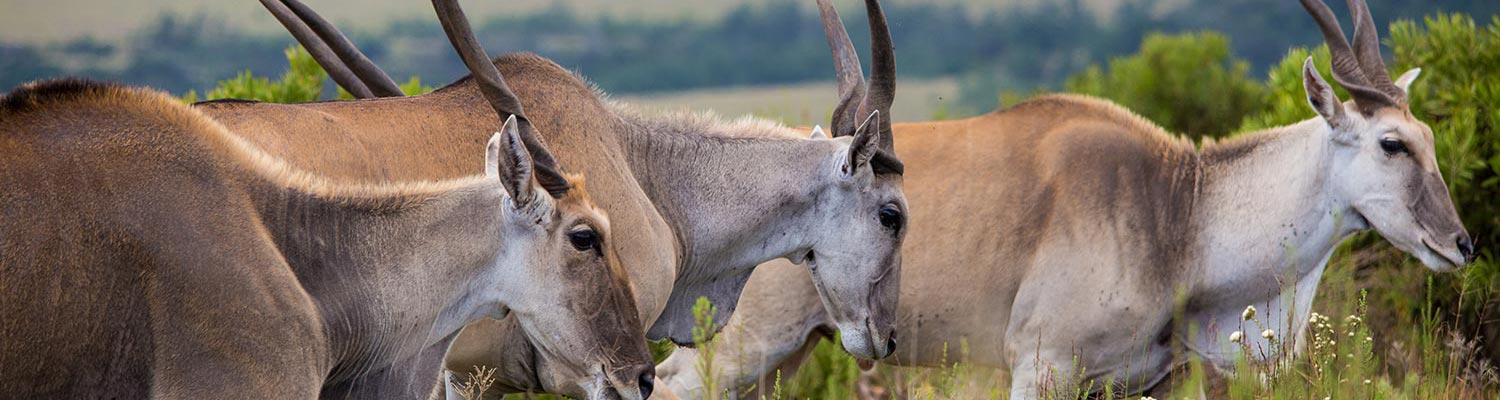
Theileria taurotragi was first described by Martin and Brocklesby19 in 1960, under the name Cytauxzoon taurotragi, as a benign parasite of the eland (Taurotragus oryx). It was subsequently demonstrated that the parasite was readily transmissible to the ox, in which it caused a transient febrile reaction,35 and it became clear that T. taurotragi was one of the benign theilerial parasites of cattle which had been known collectively as Theileria mutans since the beginning of the twentieth century.31 The disease it causes was first described by Neitz22 in 1957, when it was mistaken for a mild form of T. mutans infection transmitted by Rhipicephalus appendiculatus. The parasite is widely distributed through eastern and southern Africa, and in addition to the ox and the eland it will infect sheep and goats under experimental conditions but does not produce piroplasms.22, 33 It also infects cell lines from a number of other species of Bovidae in vitro.30 The main significance of Theileria taurotragi is the confusion that it causes in the differential diagnosis of mild reactions to Theileria parva, although it can occasionally be responsible for cases of cerebral theileriosis (Turning sickness). Theileria parva and T. taurotragi both utilise the same tick vector, Rhipicephalus appendiculatus, and antibodies to T. taurotragi cross-react in the T. parva immunofluorescent antibody test (IFAT) 17, which has complicated epidemiological studies on T. parva.
Aetiology and life cycle
The morphological and biological characteristics of T. taurotragi are generally similar to those of T. parva, but the ultrastruture of the merozoites in bovine brain is different 6. In the eland, bars and veils found in the erythrocytes are associated with the piroplasms, 36 but these structures are not present in the ox. The parasite is transmitted by R. appendiculatus and Rhipicephalus evertsi evertsi, 32 Rhipicephalus pulchellus4 and Rhipicephalus zambeziensis.14 Recovered cattle remain carriers for at least 11 months.13 The schizonts stimulate transformation of host cells to a limited extent, but the target cells have not been identified. The schizonts can be cultured in vitro in lymphoblasts, as with T. parva.29 Infection can be transmitted readily between cattle by intravenous inoculation of 100 ml of blood, which suggests that intra-erythrocytic division and invasion of new erythrocytes occurs.9
Epidemiology
Theileria taurotragi has been recorded from eastern, central and southern Africa and has been confirmed with molecular methods in Botswana 2, 21, 23, Kenya, Mozambique 20, Nigeria 16, Rwanda 1, South Africa 37, Sudan 28, Tanzania 6, Uganda 24, 25, Zambia 12 and Zimbabwe 1. This corresponds with the range of R. appendiculatus, but its other vector ticks are also found throughout this region 34. Theileria parva also occurs in most of these areas, indicating an overlap in geographic distribution. Reverse line blot analysis has allowed estimations of prevalence for T. taurotragi, which may be as high as 76% 24. Older cattle generally have a higher prevalence, reflecting infection over time; indigenous cattle breeds seem to be more resistant to infection than exotic or cross-breeds; and cattle grazing inside wildlife reserves have a higher prevalence compared to cattle grazing outside, as a result of contact with eland, which show higher levels of infection than cattle 24. Theileria taurotragi seems to be cattle and eland specific, although it has also been detected in bushbuck (Tragelaphus sylvaticus) in Uganda 24. Extensive screening of African buffalo (Syncerus caffer) has not detected T. taurotragi to date 18, 24, 26. A single report of the detection of T. taurotragi in four African buffalo, used a multiplex real-time PCR, could not be confirmed with sequencing 7. While mixed infections of T. parva and T. taurotragi in cattle are common where parasites are sympatric, this is probably due to maintenance of both parasites in cattle or the overlap in geographic distribution of African buffalo and eland 15.
Clinical signs
Infection of cattle with T. taurotragi results in a mild febrile reaction of 1 to 14 days’ duration commencing after an incubation period of 10 to 21 days.5, 13 Slight enlargement of superficial lymph nodes, especially the parotid lymph nodes draining the ears on which infected ticks have fed, is present, but there is no evidence of anorexia or other clinical signs. Toxicosis, resulting from heavy infestation with R. appendiculatus, exhibits similar signs and may occur with and overshadow the reaction to the Theileria. The parasite may occasionally cause nervous signs associated with cerebral infarction (Turning sickness).
Infection in sheep is benign. In eland the parasite sometimes causes severe or fatal disease.10
Pathogenesis and pathology
Theileria taurotragi stimulates lymphoid proliferation in the same way as T. parva, but to a very limited extent. Enlargement of lymph nodes is the only lesion to be expected, except in the case of cerebral infarction.
Diagnosis and differential diagnosis
Theileria taurotragi infection may be suspected when a mild febrile reaction, with enlargement of superficial lymph nodes, occurs in cattle exposed to Rhipicephalus infestation, and schizonts are demonstrated in lymph node smears.
Differentiation of infection with T. taurotragi from infection with T. parva has been discussed previously in relation to East Coast fever (East Coast fever) and turning sickness (Turning sickness). The T. parva-specific enzyme-linked immunosorbent assay (ELISA), unlike the IFAT, does not suffer from cross-reactions with antibodies to T. taurotragi, and several immunological and molecular tools exist which can distinguish the two parasites. For example, one of the anti-schizont monoclonal antibodies in the monoclonal antibody panel used to characterize cell cultures of isolates of Theileria reacts exclusively with T. taurotragi.3 Reverse line blot analysis can distinguish between T. parva and T. taurotragi and detect co-infections 11. When T. parva infection needs to be differentiated, a variety of specific conventional or real-time PCR assays can be used to exclude its presence 17.
Control
As T. taurotragi is usually a benign parasite, there are no indications for its treatment or control.
References
- BAZARUSANGA, T., VERCRUYSSE, J., MARCOTTY, T. & GEYSEN, D., 2007. Epidemiological studies on Theileriosis and the dynamics of Theileria parva infections in Rwanda. Veterinary Parasitology, 143, 214-221.
- BINTA, M.G., LOSHO, T., ALLSOPP, B.A. & MUSHI, E.Z., 1998. Isolation of Theileria taurotragi and Theileria mutans from cattle in Botswana. Veterinary Parasitology, 77, 83-91.
- BISHOP, R.P., SPOONER, P.R., KANHAI, G.K., KIARIE, J., LATIF, A.A., HOVE, T., MASAKA, S. & DOLAN, T.T., 1994. Molecular characterisation of Theileria parasites: application to the epidemiology of theileriosis in Zimbabwe. Parasitology, 109, 573–581.
- BROCKLESBY, D.W., 1965. Evidence that Rhipicephalus pulchellus (Gerstäcker 1873) may be a vector of some piroplasms. Bulletin of Epizootic Diseases of Africa, 13, 37–44.
- BURRIDGE, M.J., BROWN, C.G.D., CRAWFORD, J.G., KIRIMI, I.M., MORZARIA, S.P., PAYNE, R.C. & NEWSON, R., 1974. Preliminary studies on an atypical strain of bovine theileria isolated in Kenya. Research in Veterinary Science, 17, 139–144.
- CATALANO, D., BIASIBETTI, E., LYNEN, G., DI GIULIO, G., DE MENEGHI, D., TOMASSONE, L., VALENZA, F. & CAPUCCHIO, M.T., 2015. "Ormilo disease" a disorder of zebu cattle in Tanzania: bovine cerebral theileriosis or new protozoan disease? Tropical and Animal Health Production, 47, 895-901.
- CHAISI, M.E., JANSSENS, M.E., VERMEIREN, L., OOSTHUIZEN, M.C., COLLINS, N.E. & GEYSEN, D., 2013. Evaluation of a real-time PCR test for the detection and discrimination of Theileria species in the African buffalo (Syncerus caffer). PLoS One, 8, e75827.
- CHAISI, M.E., SIBEKO, K.P., COLLINS, N.E., POTGIETER, F.T. & OOSTHUIZEN, M.C., 2011. Identification of Theileria parva and Theileria sp. (buffalo) 18S rRNA gene sequence variants in the African Buffalo (Syncerus caffer) in southern Africa. Veterinary Parasitology, 182, 150-162.
- DE VOS, A.J. & ROOS, J.A., 1981. The isolation of Theileria ? taurotragi in South Africa. Onderstepoort Journal of Veterinary Research, 48, 149–153.
- GROOTENHUIS, J.G., MORRISON, W.I., KARSTAD, L., SAYER, P.D., YOUNG, A.S., MURRAY, M. & HALLER, R.D., 1980. Fatal theileriosis in eland (Taurotragus oryx): Pathology of natural and experimental cases. Research in Veterinary Science, 29, 219–229.
- GUBBELS, J.M., DE VOS, A.P., VAN DER WEIDE, M., VISERAS, J., SCHOULS, L.M., DE VRIES, E. & JONGEJAN, F., 1999. Simultaneous detection of bovine Theileria and Babesia species by reverse line blot hybridization. Journal of Clinical Microbiology, 37, 1782-1789.
- JONGEJAN, F., MUSISI, F.L., MOORHOUSE, P.D., SNACKEN, M. & UILENBERG, G., 1986. Theileria taurotragi in Zambia. Veterinary Quarterly 8, 261-263.
- LAWRENCE, J.A. & MACKENZIE, P.K.I., 1980. Isolation of a non-pathogenic theileria of cattle transmitted by Rhipicephalus appendiculatus. Zimbabwe Veterinary Journal, 11, 27–35.
- LAWRENCE, J.A., NORVAL, R.A.I. & UILENBERG, G., 1983. Rhipicephalus zambeziensis as a vector of bovine theileriae. Tropical Animal Health and Production, 15, 39–42.
- LORENZEN, E.D., HELLER, R. & SIEGISMUND, H.R., 2012. Comparative phylogeography of African savannah ungulates. Molecular Ecology, 21, 3656-3670.
- LORUSSO, V., WIJNVELD, M., MAJEKODUNMI, A.O., DONGKUM, C., FAJINMI, A., DOGO, A.G., THRUSFIELD, M., MUGENYI, A., VAUMOURIN, E., IGWEH, A.C., JONGEJAN, F., WELBURN, S.C. & PICOZZI, K. 2016. Tick-borne pathogens of zoonotic and veterinary importance in Nigerian cattle. Parasites and Vectors, 9, 217.
- MANS, B.J., PIENAAR, R. & LATIF, A.A., 2015. A review of Theileria diagnostics and epidemiology. International Journal for Parasitology: Parasites and Wildlife, 4, 104–118.
- MANS, B.J., PIENAAR, R., RATABANE, J., PULE, B. & LATIF, A.A., 2016. Investigating the diversity of the 18S SSU rRNA hyper-variable region of Theileria in cattle and Cape buffalo (Syncerus caffer) from southern Africa using a next generation sequencing approach. Ticks and Tick Borne Diseases, 7, 869-879.
- MARTIN, H. & BROCKLESBY, D.W., 1960. A new parasite of the eland. The Veterinary Record, 72, 331–332.
- MARTINS, T.M., NEVES, L., PEDRO, O.C., FAFETINE, J.M., DO ROSÁRIO, V.E. & DOMINGOS, A., 2010. Molecular detection of Babesia spp. and other haemoparasitic infections of cattle in Maputo Province, Mozambique. Parasitology, 137, 939-946.
- MOUMOUNI, A.P.F., ABOGE, G.O., TERKAWI, M.A., MASATANI, T., CAO, S., KAMYINGKIRD, K., JIRAPATTHARASATE, C., ZHOU, M., WANG, G., LIU, M., IGUCHI, A., VUDRIKO, P., YBANEZ, A.P., INOKUMA, H., SHIRAFUJI-UMEMIYA, R., SUZUKI, H. & XUAN, X., 2015. Molecular detection and characterization of Babesia bovis, Babesia bigemina, Theileria species and Anaplasma marginale isolated from cattle in Kenya. Parasites and Vectors, 8, 496.
- NEITZ, W.O., 1957. Theileriosis, gonderioses and cytauxzoonoses: A review. Onderstepoort Journal of Veterinary Research, 27, 275–430.
- NJIIRI, N.E., BRONSVOORT, B.M., COLLINS, N.E., STEYN, H.C., TROSKIE, M., VORSTER, I., THUMBI, S.M., SIBEKO, K.P., JENNINGS, A., VAN WYK, I.C., MBOLE-KARIUKI, M., KIARA, H., POOLE, E.J., HANOTTE, O., COETZER, K., OOSTHUISEN, M.C., WOOLHOUSE, M. & TOYE, P., 2015. The epidemiology of tick-borne haemoparasites as determined by the reverse line blot hybridization assay in an intensively studied cohort of calves in western Kenya. Veterinary Parasitology, 210, 69-76.
- OURA, C.A., TAIT, A., ASIIMWE, B., LUBEGA, G.W. & WEIR, W., 2011. Theileria parva genetic diversity and haemoparasite prevalence in cattle and wildlife in and around Lake Mburo National Park in Uganda. Parasitology Research, 108, 1365-1374.
- OURA, C.L., BISHOP, R.P., WAMPANDE, E.M., LUBEGA, G.W. & TAIT, A., 2004. Application of a reverse line blot assay to the study of haemoparasites in cattle in Uganda. International Journal of Parasitology, 34, 603-613.
- PIENAAR, R., POTGIETER, F.T., LATIF, A.A., THEKISOE, O.M. & MANS, B.J., 2011a. Mixed Theileria infections in free-ranging buffalo herds: implications for diagnosing Theileria parva infections in Cape buffalo (Syncerus caffer). Parasitology, 138, 884-895.
- PIENAAR, R., POTGIETER, F.T., LATIF, A.A., THEKISOE, O.M. & MANS, B.J., 2011b. The Hybrid II assay: a sensitive and specific real-time hybridization assay for the diagnosis of Theileria parva infection in Cape buffalo (Syncerus caffer) and cattle. Parasitology, 138, 1935-1944.
- SALIH, D.A., EL HUSSEIN, A.M., SEITZER, U. & AHMED, J.S., 2007. Epidemiological studies on tick-borne diseases of cattle in Central Equatoria State, Southern Sudan. Parasitology Research, 101, 1035-1044.
- STAGG, D.A., KANHAI, G.K., YOUNG, A.S. & BROWN, C.G.D., 1976. The establishment of Theileria-infected cell lines from an eland (Taurotragus oryx, Lydekker 1906). Research in Veterinary Science, 20, 122–126.
- STAGG, D.A., YOUNG, A.S., LEITCH, B.L., GROOTENHUIS, J.G. & DOLAN, T.T., 1983. Infection of mammalian cells with Theileria species. Parasitology, 86, 243–254.
- THEILER, A., 1906. Piroplasma mutans (n. spec.) of South African cattle. Journal of Comparative Pathology and Therapeutics, 19, 292–300.
- THEILER, A., 1907. Further notes on Piroplasma mutans, a new species of piroplasm in South African cattle. Journal of Comparative Pathology and Therapeutics, 20, 1–18.
- UILENBERG, G., PERIÉ, N.M., LAWRENCE, J.A., DE VOS, A.J., PALING, R.W. & SPANJER, A.A.M., 1982. Causal agents of bovine theileriosis in southern Africa. Tropical Animal Health and Production, 14, 127–140.
- WALKER, J.B., KEIRANS, J.E. & HORAK, I.G., 2000. The Genus Rhipicephalus (Acari, Ixodidae). A Guide to the Brown Ticks of the World. Cambridge University Press.
- YOUNG, A.S., GROOTENHUIS, J.G., KIMBER, C.D., KANHAI, G.K. & STAGG, D.A., 1977. Isolation of a Theileria species from eland (Taurotragus oryx) infective for cattle. Tropenmedizin und Parasitologie, 28, 185–194.
- YOUNG, A.S., GROOTENHUIS, J.G., SMITH, K., FLOWERS, M.J., DOLAN, T.T. & BROCKLESBY, D.W., 1978. Structures associated with Theileria parasites in eland erythrocytes Annals of Tropical Medicine and Parasitology, 72, 443–454.
- YUSUFMIA, S.B., COLLINS, N.E., NKUNA, R., TROSKIE, M., VAN DEN BOSSCHE, P. & PENZHORN, B.L., 2010. Occurrence of Theileria parva and other haemoprotozoa in cattle at the edge of Hluhluwe-iMfolozi Park, KwaZulu-Natal, South Africa. Journal of the South African Veterinary Association, 81, 45-49.