- Infectious Diseases of Livestock
- Part 3
- Brucella infections in terrestrial wildlife
- GENERAL INTRODUCTION: SPIROCHAETES
- Swine dysentery
- Borrelia theileri infection
- Borrelia suilla infection
- Lyme disease in livestock
- Leptospirosis
- GENERAL INTRODUCTION: AEROBIC ⁄ MICRO-AEROPHILIC, MOTILE, HELICAL ⁄ VIBROID GRAM-NEGATIVE BACTERIA
- Genital campylobacteriosis in cattle
- Proliferative enteropathies of pigs
- Campylobacter jejuni infection
- GENERAL INTRODUCTION: GRAM-NEGATIVE AEROBIC OR CAPNOPHILIC RODS AND COCCI
- Moraxella spp. infections
- Bordetella bronchiseptica infections
- Pseudomonas spp. infections
- Glanders
- Melioidosis
- Brucella spp. infections
- Bovine brucellosis
- Brucella ovis infection
- Brucella melitensis infection
- Brucella suis infection
- Brucella infections in terrestrial wildlife
- GENERAL INTRODUCTION: FACULTATIVELY ANAEROBIC GRAM NEGATIVE RODS
- Klebsiella spp. infections
- Escherichia coli infections
- Salmonella spp. infections
- Bovine salmonellosis
- Ovine and caprine salmonellosis
- Porcine salmonellosis
- Equine salmonellosis
- Yersinia spp. infections
- Haemophilus and Histophilus spp. infections
- Haemophilus parasuis infection
- Histophilus somni disease complex in cattle
- Actinobacillus spp. infections
- Actinobacillus equuli infections
- Gram-negative pleomorphic infections: Actinobacillus seminis, Histophilus ovis and Histophilus somni
- Porcine pleuropneumonia
- Actinobacillus suis infections
- Pasteurella and Mannheimia spp. infections
- Pneumonic mannheimiosis and pasteurellosis of cattle
- Haemorrhagic septicaemia
- Pasteurellosis in sheep and goats
- Porcine pasteurellosis
- Progressive atrophic rhinitis
- GENERAL INTRODUCTION: ANAEROBIC GRAM-NEGATIVE, IRREGULAR RODS
- Fusobacterium necrophorum, Dichelobacter (Bacteroides) nodosus and Bacteroides spp. infections
- GENERAL INTRODUCTION: GRAM-POSITIVE COCCI
- Staphylococcus spp. infections
- Staphylococcus aureus infections
- Exudative epidermitis
- Other Staphylococcus spp. infections
- Streptococcus spp. infections
- Strangles
- Streptococcus suis infections
- Streptococcus porcinus infections
- Other Streptococcus spp. infections
- GENERAL INTRODUCTION: ENDOSPORE-FORMING GRAM-POSITIVE RODS AND COCCI
- Anthrax
- Clostridium perfringens group infections
- Clostridium perfringens type A infections
- Clostridium perfringens type B infections
- Clostridium perfringens type C infections
- Clostridium perfringens type D infections
- Malignant oedema⁄gas gangrene group of Clostridium spp.
- Clostridium chauvoei infections
- Clostridium novyi infections
- Clostridium septicum infections
- Other clostridial infections
- Tetanus
- Botulism
- GENERAL INTRODUCTION: REGULAR, NON-SPORING, GRAM-POSITIVE RODS
- Listeriosis
- Erysipelothrix rhusiopathiae infections
- GENERAL INTRODUCTION: IRREGULAR, NON-SPORING, GRAM-POSITIVE RODS
- Corynebacterium pseudotuberculosis infections
- Corynebacterium renale group infections
- Bolo disease
- Actinomyces bovis infections
- Trueperella pyogenes infections
- Actinobaculum suis infections
- Actinomyces hyovaginalis infections
- GENERAL INTRODUCTION: MYCOBACTERIA
- Tuberculosis
- Paratuberculosis
- GENERAL INTRODUCTION: ACTINOMYCETES
- Nocardiosis
- Rhodococcus equi infections
- Dermatophilosis
- GENERAL INTRODUCTION: MOLLICUTES
- Contagious bovine pleuropneumonia
- Contagious caprine pleuropneumonia
- Mycoplasmal pneumonia of pigs
- Mycoplasmal polyserositis and arthritis of pigs
- Mycoplasmal arthritis of pigs
- Bovine genital mycoplasmosis
- Neurotoxin-producing group of Clostridium spp.
- Contagious equine metritis
- Tyzzer's disease
- MYCOTIC AND ALGAL DISEASES: Mycoses
- MYCOTIC AND ALGAL DISEASES: Pneumocystosis
- MYCOTIC AND ALGAL DISEASES: Protothecosis and other algal diseases
- DISEASE COMPLEXES / UNKNOWN AETIOLOGY: Epivag
- DISEASE COMPLEXES / UNKNOWN AETIOLOGY: Ulcerative balanoposthitis and vulvovaginitis of sheep
- DISEASE COMPLEXES / UNKNOWN AETIOLOGY: Ill thrift
- Eperythrozoonosis
- Bovine haemobartonellosis
Brucella infections in terrestrial wildlife
This content is distributed under the following licence: Attribution-NonCommercial CC BY-NC  View Creative Commons Licence details here
Brucella infections in terrestrial wildlife
Previous authors: J GODFROID
Current authors:
J X L GODFROID - Faculty of Biosciences, Fisheries and Economics, UiT - The Arctic University of Norway, Hansine Hansens veg 18, Tromsø 9019, Norway and Faculty of Veterinary Science, University of Pretoria, Private, Bag X04, Onderstepoort, Gauteng, South Africa, 0081
J M BLASCO - Emeritus Researcher, DVM, PhD, Cita/Ia2/University Zaragoza Avenue, Montañana 930, Zaragoza, 50011, Spain
J RHYAN - U.S. Department of Agriculture, Animal and Plant Health Inspection Service, Veterinary Services, Fort Collins, CO, United States of America
Introduction
Brucellosis in wildlife is characterized by abortion, retained placenta, orchitis, epididymitis, and excretion of brucellae in semen, uterine discharges and milk.
The epidemiological link between wildlife and many of the diseases in livestock is now well recognized (see Infectious diseases of animals in sub-Saharan Africa: The wildlife/livestock interface). The long-standing conflict between livestock owners and animal health authorities on one hand, and wildlife conservationists on the other, is largely based on differing attitudes to controlling diseases of livestock that are or can be associated with wildlife. The creation of new interfaces between livestock and wildlife due to anthropogenic effects is the most important factor in disease transmission.9 Translocation or introduction of wildlife species into an area where they did not occur previously and a lack of surveillance in wildlife may increase these interfaces and consequently transmission of diseases.10
When studying brucellosis in wildlife, four main questions arise:36
- Is wildlife brucellosis a result of a spill-over from livestock or is it a sustainable infection in one or more wildlife host species?
- Is wildlife brucellosis a reservoir of Brucella spp. for livestock?
- Did the epidemiological situation of Brucella infection in wildlife change over time and, if so, what are the main drivers of change and does it have an impact on wildlife population dynamics?
- Is wildlife brucellosis of zoonotic concern?
To avoid potential conflicts between ecologists, regulatory veterinary services, production animal and wildlife industries and veterinary public health authorities, the general approach has evolved from the diagnosis of brucellosis as a disease in wildlife to include the early detection of pre- or subclinical infections and to identifying routes of transmission of infection between different host species at the livestock/wildlife interface. This approach is aimed at initiating preventive control and management measures in order to decrease the disease risks in both livestock and free ranging/captive wildlife as well as the zoonotic potential.40
Brucellosis is an ancient disease with a low fatality rate in humans (less than 2 per cent of untreated cases). Yet human brucellosis remains the most common zoonotic disease worldwide with more than 500 000 new cases annually. It is associated with substantial residual disability and is an important cause of travel-associated morbidity.67 The vast majority of these cases are caused by B. melitensis and are linked to contact with livestock or consumption of mainly raw dairy products.36 However, from a veterinary and public health perspective, the risk of spill-over of B. melitensis from ibex (Capra ibex) in the Alps to livestock and from there to humans is considered very low.2
It is worth noting that, to date, there is no report of the direct transmission of B. abortus from elk (Cervus canadensis) to humans in the Greater Yellowstone Area (GYA) in the USA. Although the Yellowstone Park service raises awareness about the risk for people in the GYA (https://www.nps.gov/yell/learn/nature/brucellosis.htm), the US Centers for Disease Control and Prevention only mentions hunting feral pigs (infected with B. suis biovar 1) as a zoonotic risk (https://www.cdc.gov/brucellosis/exposure/hunters.html).
Spillover of B. suis biovar 4 infections from semi-domesticated reindeer have been reported in indigenous people in Canada, Alaska, and Russia. In North America, the average number of cases is one per year.26 The situation globally is comparable with that in Russia with the exception of Yakutia, in the Far East, where the infection rate is high (4.8-5.6 per cent) among reindeer breeders.71 In contrast to B. suis biovars 1, 3 and 4, B. suis biovar 2 has rarely been isolated from humans.56
In sub-Saharan Africa, no proof of direct transmission of Brucella spp. from wildlife to humans has been reported, although transmission resulting from preparing and consuming African buffalo (Syncerus caffer) bushmeat has been suggested.3
Aetiology and epidemiology
Brucellae are Gram-negative, facultative intracellular bacteria that can infect many mammalian species including humans. Twelve species are recognized within the genus Brucella:
- a group composed of the six “classical” Brucella species, some of which include different biovars: Brucella abortus (biovars 1, 2, 3, 4, 5, 6, 7, 9), Brucella melitensis (biovars 1, 2, 3), Brucella suis (biovars 1, 2, 3, 4, 5), Brucella ovis, Brucella canis, and Brucella neotomae,4 and
- a group represented by the six "new" recently described species: Brucella ceti,28 Brucella pinnipedialis,28 Brucella microti,82 Brucella inopinata,83 Brucella vulpis84 and Brucella papionis.92
Distinction between species and biovars is currently performed by using several differential laboratory tests.4
Brucella spp. have been isolated mainly from mammals, but have also recently been found in ectotherms like frogs20 and fishes.21 Experimental studies and epidemiological evidence suggest that birds are resistant to Brucella spp. infection.4
Apart from their respective host preferences in livestock, B. abortus and B. suis have also been isolated from a great variety of wildlife species such as bison (Bison bison), red deer (Cervus elaphus), elk (Cervus canadensis), feral swine and wild boar (Sus scrofa), red fox (Vulpes vulpes), European brown hare (Lepus europaeus), African buffalo (Syncerus caffer), reindeer (Rangifer tarandus tarandus), caribou (Rangifer tarandus groenlandicus), moose (Alces alces), and musk ox (Ovibos moschatus). Wildlife has thus been considered to be a potential reservoir for brucellosis in livestock.15, 72 Sporadic cases of B. abortus and B. melitensis infections have been reported in Europe in chamois (Rupicapra rubicapra) and ibex (Capra ibex) in the Alps.24, 25, 34 However, in 2014, an endemic B. melitensis infection was described in ibex in the Bargy Massif in the French Alps.58 Brucellosis in wild animals in Africa has been documented in a variety of countries since the early 1960s with serological studies and some Brucella isolations (mainly B. abortus) in some wildlife species.86
Brucella ovis and B. canis are responsible for ovine brucellosis (misnamed as ram epididymitis) and canine brucellosis, respectively, which have not been reported in wildlife in Europe. However, B. ovis infection has been described in red deer in New Zealand.73 Brucella neotomae has been isolated from desert rats in Utah, USA4 and humans in Costa-Rica.88
Since the first report of abortion due to Brucella sp. in a captive dolphin in California in 1994,23 several studies have described the isolation and characterization of Brucella spp. from a wide variety of marine mammals such as seals, porpoises, dolphins, and whales in almost all the oceans worldwide. Although brucellosis seropositivity has been detected in Antarctic seals, no Brucella spp. have been isolated as yet.64 The overall characteristics of marine mammal Brucella strains are different from the six “classical” Brucella species (see above). Since 2007, B. ceti and B. pinnipedialis (infecting particularly cetaceans and pinnipeds, respectively) are recognized as new Brucella species.28, 62
In 1999 to 2003, an acute disease was reported in the common vole (Microtus arvalis) in South Moravia (Czech Republic). A new Brucella species (Brucella microti) was isolated and characterized from clinical samples of diseased voles,46, 82 red foxes80 and soil.81 Brucella inopinata was recently isolated from a breast implant infection in an elderly woman with clinical signs of brucellosis82 and has to date not been isolated from any non-human species. Brucella vulpis has been isolated from mandibular lymph nodes of two red foxes in Austria84and Brucella papionis from clinical specimens obtained from baboons (Papio sp.) that delivered stillborn offspring at a primate research centre in Texas, USA (baboons were capture in the wild and imported from Tanzania).79, 92
An important issue related to brucellosis in terrestrial wildlife is to distinguish between a spill-over infection from livestock and a sustainable infection in wildlife, i.e., an infection maintained over time in a given wildlife species without any external source of bacteria. In the latter case, the concern of the livestock industry is to prevent the re-introduction of the infection in livestock, particularly in regions or states that are considered to be free of brucellosis, because of the costs linked to pre-movement testing.36
There is ample information in the literature highlighting the fact that different wildlife species may become infected with Brucella spp. However, few studies address the sustainability of Brucella infections in wildlife. Sustainable Brucella infections occur in the following wildlife species: B. abortus in African buffalo, bison and elk (not in red deer); B. melitensis in Alpine ibex; B. suis biovar 2 in wild boar and European hare, and B. suis biovar 4 in reindeer and caribou.36
It should be emphasized that introduction of infected individuals into a healthy population does not necessarily result in effective transmission of Brucella spp. to a given wildlife host. The probability of brucellosis becoming sustainable in a wild species will be less than the probability of infection, and close to zero in some cases because sustainability depends on a combination of factors including host susceptibility, infectious dose, frequency of contacts with infected animals, and certain management and environmental factors.33 In this context, the increased density of wildlife and development of the game farming industry has contributed to the re-emergence of brucellosis as a serious concern for both livestock and wildlife, by increasing the density of potentially infected wildlife species and the introduction of supplementary feeding.62, 72, 90
Brucella spp. cannot multiply outside their mammalian hosts but may remain viable for variable periods in the environment (e.g. several years in the case of B. microti). In general, the viability of Brucella spp. outside the mammalian host is enhanced by cool temperatures and moisture and limited by high temperatures, desiccation and direct exposure to sunlight (see Brucella abortus infection). For example, B. abortus survives a couple of hours of direct sunlight but up to 185 days at low temperatures (4 °C) and in the shade and for 150-240 days in aborted foetuses, manure and water.75 The epidemiological importance of environmental contamination as a source of Brucella spp. for wildlife has to be assessed on a case-by-case basis, first excluding direct transmission from an infected host.
Brucella abortus infection
Because of the costly brucellosis eradication efforts in countries in the European Union and North America, the emphasis in these regions was on the identification of a possible reservoir of B. abortus in wildlife. When brucellosis was still prevalent in cattle, numerous surveys reported seropositive wild ungulates like elk and bison in the American National Parks of the Greater Yellowstone Area (GYA) in the USA62, 72, 90 and in the Canadian Wood Buffalo National Park.85 Importantly, since the turn of the 21st century, the epidemiology of brucellosis has changed in the GYA.62 Indeed, there is now clear evidence that transmission of B. abortus to domestic livestock in the GYA originates from infected elk, and not bison, as in the previous decades.49, 62 Since 2000, 27 outbreaks of B. abortus infection in cattle and domestic bison have been detected in the GYA, and all these outbreaks have originated from spill-over B. abortus infection from elk, as demonstrated by molecular tools.49
In Europe, under free-ranging conditions, B. abortus infection in wildlife was considered to be self-limiting or a consequence of spill-over infections from cattle. For example, in Italy in 1995, B. abortus was isolated from 7/112 culled chamois (Rupicapra rupicapra) but brucellosis did not seem to be present in larger areas of the Western Italian Alps, where bovine brucellosis is absent.24 A recent survey in the Iberian Peninsula highlighted the fact that wild ruminants were not a significant brucellosis source or reservoir for livestock.60 Brucella abortus biovar 1 was only isolated from a single red deer, probably as a spill-over from infected cattle. These results suggest that in Europe wild ruminants occasionally become infected from infected livestock, rather than act as true reservoirs of the infection for livestock.60 Thus, the available epidemiological information indicates that in Europe, wild ruminants are not able to sustain B. abortus infection without introduction from infected cattle. Given the progress in the eradication programmes for bovine brucellosis in the European Union (EU) Member States, it is unlikely that B. abortus will become a threat to wildlife in the EU in future.
Although Brucella abortus infections have been described in domestic Asian buffalo (Bubalus bubalis), the infection has not been documented in wild Asian buffalo (Bubalus arnee).
In Southern Africa, the African buffalo is considered a reservoir of B. abortus.43 In a recent systematic review, buffalo populations throughout Africa were more likely to be infected and had a higher seroprevalence than other species; the pooled seroprevalence was 13.7 per cent (95 per cent CI: 10.3-17.3 per cent) in buffalo, 7.1 per cent (95 per cent CI: 1.1-15.5 per cent) in carnivores and 2.1 per cent (95 per cent CI: 0.1-4.9 per cent) in antelope.86 Interaction between Kafue lechwe antelope (Kobus leche kafuensis) and cattle is regarded as an important risk factor for increased brucellosis in wildlife in Zambia.59
Nowadays, in countries where bovine brucellosis eradication programmes are close to termination, there are few known reservoirs of B. abortus in wild species other than bison, elk and African buffalo. However, recent studies in feral pigs on the Atlantic coast of South Carolina, USA, may challenge this: indeed, wild type B. abortus and the B. abortus S19 and RB51 vaccine strains were isolated from feral pigs on a property where no cattle had been kept since at least 1970.87 Although these findings need further confirmation, this is the first report of a wildlife reservoir of B. abortus other than bison, elk and African buffalo. In Europe, B. abortus has not been detected in wild boars.
Brucella melitensis infection
The ecological range of B. melitensis in wildlife is more restricted than those of B. abortus and B. suis. Spill-over from infected small ruminants has been documented in a few wildlife species like chamois and ibex in the French and Italian Alps25, 34 and the Iberian wild goat (Capra pyrenaica) in Spain.60 Given the effective eradication of small ruminant brucellosis in Northern and Central Europe a long time ago, and the important progress in the B. melitensis eradication programmes in some Mediterranean EU Member States, it was thought that this infection would most likely not become a problem in future. The paucity of reports suggested that these wild species were unable to sustain the infection or act as reservoirs for domestic animals and humans. This view was changed after the discovery of an endemic B. melitensis infection in ibex in the Bargy Massif in the French Alps, where B. melitensis had been eradicated in small ruminants for decades.58 It is worth noting that foci of B. melitensis infection in small ruminants persist in the Balkans that may threaten wild ruminants.
In the Middle East, most B. melitensis infections in nomadic one-humped camels (Camelus dromedarius) occur in those in contact with sheep and goats.1 This was also the case in two-humped camels (Camelus bactrianus) and yaks (Bos grunniens) in Central Asia.74 Brucella melitensis has been isolated from camel’s milk, and can constitute a serious public health problem.43 It also occurs in llamas and other small camelids in some South American countries.6
In Africa, B. melitensis has been isolated once in 1971 in impala (Aepyceros melampus) in Tanzania,86 and has recently been detected in African buffalo and sable antelope (Hippotragus niger) in South Africa (Henriette Van Heerden and Nick Kriek 2019, personal communication). Brucella melitensis has been isolated from both skin swabs and visceral organs of Nile catfish.21, 77
Brucella suis infection
Brucella suis (biovars 1, 2, 3) occurs worldwide (see Brucella suis infection).55, 57 Brucella suis biovar 1 infection transmitted from wild boar has been reported in cattle13, 55 and dogs,55, 70 but the epidemiological importance of these findings is unknown. A recent report described the isolation of atypical B. suis biovar 3 in horses in Croatia.14 Further molecular studies grouped these Croatian strains with B. suis biovar 1 isolates.30 The taxonomic relevance of B. suis biovar 3, or at least the representativeness of its reference strain is questioned since there is no single field strain of B. suis that matched both microbiological and molecular profiles of the biovar 3 reference strain.30
Brucella suis biovar 1 infections are restricted to feral pigs in Australia and the USA, with human infections associated with butchering of these pigs.18, 78 Brucella suis biovar 1 has been isolated from humans, domestic pigs,55 collared peccaries (Tayassu tajacu)54 and armadillos (Chaetophractus villosus)50 in South America. In Croatia, during the period 1980 to 2003, B. suis biovar 1 has been isolated from wild boar, hares, domestic pigs and horses.32 However, to date, no human B. suis biovar 1 infection has been reported in Croatia.67 In 1993, B. suis biovar 1 was isolated from a butcher handling imported feral pig meat in Belgium, where the last B. suis biovar 1 infection had been reported in a pig farmer in 1983.39
Brucella suis biovar 2 infection remains restricted to wild boar and the European hare (Lepus europaeus) in European countries where B. suis has been eradicated in the intensive domestic pig industry for decades, although sporadic outbreaks occur in outdoor reared pigs as a spill-over from wildlife reservoirs.22
The geographical distribution of biovar 2 has historically been in a broad range between Scandinavia and the Balkans. In recent years, B. suis biovar 2 infections in wild boar and the European hare have been reported in the region from the Iberian Peninsula60 to central Europe.68, 89, 94
The role of hares in the spread of brucellosis is of lesser importance than that of wild boars due to the particular migratory behaviour of the latter species. Solitary wild boar adult males may range long distances if disturbed or in case of food shortage, while hares have a non-migratory lifestyle and occupy small home ranges, reducing the interface with other wildlife and domestic animals. However, ten clinical outbreaks of B. suis biovar 2 infection in domestic pigs have been recorded in Denmark during 1929 to 1999, and epidemiological evidence linked these outbreaks to hares. Brucella suis biovar 2 infections in cattle have also been reported in Denmark5 and the source of infection is believed to have been hares since there was no established population of free-ranging wild boar in Denmark. Recently B. suis biovar 2 has been isolated from cattle in Belgium in an area where there is a high prevalence of B. suis biovar 2 in wild boars.29 In contrast to B. suis biovars 1, 3 and 4, which can cause a severe disease in humans, B. suis biovar 2 has only been isolated in a small number of patients.56
Brucellosis in reindeer and caribou (also named rangiferine brucellosis) is caused by B. suis biovar 4 throughout the Arctic region (Siberia, Canada and Alaska, with the exception of Norway) and constitutes a serious zoonotic problem.26 Human cases were restricted to herders of diseased reindeer or caribou70 and it has been demonstrated experimentally that cattle exposed to B. suis biovar 4 infected reindeer can become infected.27 Brucella suis biovar 4 may also infect moose and musk ox and occasionally different wild carnivores.26 A serological study in 1999 concluded that brucellosis was not present in reindeer in Finnmark, northern Norway.8
Pathogenesis
The pathogenesis of brucellae in the different wildlife species has not been properly elucidated but is most probably similar to that described for brucellosis infections in domestic animal species15, 17 (see Brucella melitensis, B. abortus and B. suis infections).
The prevalence of brucellosis in some wildlife species is in most instances low and thus, besides usual factors that play a role in transmission (i.e. host susceptibility, shedding, survival in the environment), behaviour of individual animals and the interaction between wildlife and livestock at the interface are regarded as the most important drivers for transmission.62 For instance, the reclusive calving behaviour of elk, which keeps the elk cow and calf away from the herd for several days after calving, will minimize the risks of B. abortus transmission to other animals and, in free-ranging settings where density is low, elk may likely be looked upon as a dead-end host. On the contrary, in situations with important anthropogenic effects (i.e. supplementary winter feeding of wild animals), the risk of infection increases significantly by increasing density and by enhancing the risk of exposure to infectious aborted foetuses and foetal membranes. In the GYA, winter feeding changed the behaviour and density of free-ranging elk, likely converting what in nature is a dead-end host to a maintenance host of B. abortus.62, 90
As documented recently in the context of bovine tuberculosis due to Mycobacterium bovis, certain individuals with relatively high contact rates in both cattle and badger populations have the potential to act as “hubs” in the spread of disease through complex contact networks.11
Clinical signs
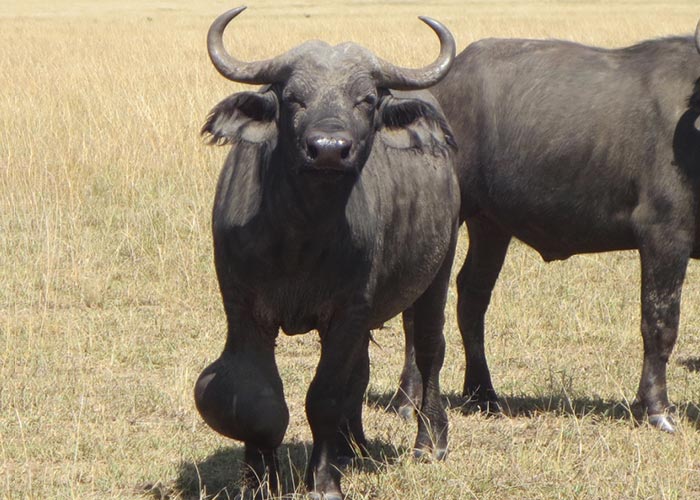
Brucellosis in wildlife is characterized by abortion, retained placenta, metritis, sub-clinical mastitis, infertility, orchitis or epididymitis, infertility or sterility, and articular and peri-articular hygromas (Figure), seen more frequently in chronic infections. Abortion is the main sign of clinical brucellosis and occurs mostly during the second half of gestation.17, 35 In 75 to 90 per cent of cases, the animals will abort only once. Some animals born from Brucella-infected females can be latent carriers and can only be diagnosed by immunological tests after their first or second pregnancy, as demonstrated experimentally in cattle.69
Although B. abortus abortion and other effects such as testicular abscesses, retained placentas, arthritis, and death of neonates may be important in individual animals, these are not generally considered to be a threat to the sustainability of elk, bison or African buffalo populations.41, 62
Pathology
Brucella spp. infection in wildlife causes similar pathology (see Brucella melitensis, B. suis and B. abortus infections) to that caused in domestic animals.15, 66, 95
Diagnosis
A definitive diagnosis of brucellosis depends on laboratory testing. Laboratory diagnosis includes indirect tests that can be applied to milk or blood, as well as direct tests (classical bacteriology and direct PCR based methods).4, 7 The choice of a particular testing strategy depends on the prevailing epidemiological situation of brucellosis in susceptible animals (livestock and wildlife) in a country or a region. Isolation of Brucella spp. or specific DNA detection by PCR is necessary to confirm the diagnosis.40 Biotyping provides important epidemiological information that allows tracing of infection sources in countries in which several biotypes are co-circulating.40 However, when one particular biovar is the overwhelmingly predominant isolated strain, classical typing techniques are of no help. In this context, new fingerprinting methods such as Multiple Locus Variable [number of tandem repeat] Analysis (MLVA) and Multi Locus Sequence Analysis (MLSA), are gaining wider acceptance and will be used in the near future as routine typing and fingerprinting methods for epidemiological purposes.52, 93
It is important to note that the majority of the studies on Brucella infections in wildlife rely on serology,35, 36 although Brucella infection may or may not induce an immune response.
Besides being 100 per cent sensitive and 100 per cent specific, an ideal serological test should make it possible to differentiate infectious animals from ones that have previously been infected or exposed but are no longer able to transmit the infection. Unfortunately, such a test does not exist.36 Brucellosis serology has other drawbacks such as inability to differentiate between the Brucella species based on the antibodies induced in the host40 and to detect “latent” infection defined as a seronegative Brucella-infected animal (see Brucella abortus infections). Latent infection has been well studied in cattle, where up to 10 per cent of calves born to B. abortus-infected heifers remain seronegative.69 Most latently infected female calves will abort at their first pregnancy. Latent infection has not been studied in wildlife brucellosis.
Indirect diagnostic tests
Numbers of brucellosis serological studies have been performed in wildlife as well as in zoological collections to assess the prevalence of Brucella spp. in different wild species. Brucellosis serology in wildlife is usually performed using the same antigens as in domestic ruminants because the Brucella immunodominant antigens are associated with the surface “smooth” lipopolysaccharide (S-LPS) shared by all the naturally occurring “smooth” Brucella species.7 It is important to note that B. ovis and B. canis present on their surface a “rough” LPS, which is antigenically different to the S-LPS and thus they cannot be detected by the classical serological tests used for detecting anti-S-LPS antibodies.7
A sound testing strategy is to first determine the apparent prevalence of brucellosis in wildlife by serology and thereafter isolate the bacteria that induced the detected antibodies from a selected subset of samples.
Most brucellosis serological tests used in wildlife brucellosis studies have been directly transposed, without any previous validation, from those used in domestic livestock populations. These brucellosis serological tests are described by the Office International des Epizooties (OIE, the World Organization for Animal Health).7 The same serological procedures may be used in wildlife, but each test should be validated for its fitness in the corresponding animal species.47 Importantly, some of these assays rely on species-specific reagents that are not commercially available.
In order to determine the apparent prevalence of brucellosis in wildlife, a simple classical test such as the Rose Bengal test (RBT) is recommended.7 However, this test requires high quality serum. Poor quality serum samples provide results in both the RBT and complement fixation test (CFT) that are frequently uninterpretable.7 Therefore, recent brucellosis studies in wildlife have been based on enzyme-linked immunosorbent assays (ELISA)63 and fluorescence polarization assays (FPA).31 The degree of haemolysis and the quality of serum samples do not significantly affect the diagnostic performance of these tests.37 However, in wildlife species, the interpretation of ELISA and FPA results may be problematic, due to the lack of validation studies. Whenever possible, the cut-off of ELISAs should be properly established for the particular species using the appropriate validation techniques.7, 37, 47
The unavailability of polyclonal or monoclonal antibodies that detect immunoglobulins in different wildlife species can be overcome in indirect ELISA by using either Protein A or Protein G as conjugates.42, 61, 63
Bacteria like Yersinia enterocolitica O:9 induce serological cross-reactions in the brucellosis serological tests that are almost indistinguishable from true brucellosis serological reactions.61, 76, 91 Other cross-reactive bacteria exist in wildlife like Francisella tularensis, an important pathogen in hares.45 Thus, false positive serological reactions have always to be taken into account for a sound interpretation of serological results in the absence of bacterial isolation. The parallel use of S-LPS based tests and tests detecting specific antibodies directed against Brucella cytoplasmic proteins as documented in moose19 and elk51 could be of some help to differentiate cross-reactions from antibody responses due to true Brucella spp. infection.
To gain confidence in brucellosis serological testing in wildlife, it has been suggested to use two tests either in parallel (enhanced sensitivity) or in series (enhanced specificity). Before deciding on the choice of tests, the degree of concordance of test results obtained with both tests should be assessed beforehand, as shown for brown bears in Alaska.37 It has been demonstrated that a poor degree of concordance may suggest nonspecific reactions or a technical problem when performing the testing.37
Another approach could be based on assessing the cell-mediated immunity through in vivo (skin tests) or in vitro (proliferation assays or cytokine detection assays) methods against specific Brucella cytoplasmic proteins. Some of these approaches have been applied in domestic animals, particularly cattle,76 but their efficacy has not been properly studied in wildlife. It is also important to acknowledge that although brucellosis tests are usually adequate for the detection of an infected group of animals, they can have important limitations in detecting infected individuals.
Direct diagnosis
Several techniques are available to identify Brucella spp. (see Brucella melitensis, B. suis and B. abortus infections). The staining of smears from pathological materials is still often used and can provide valuable information for aborted specimens.4, 7 Bacterial isolation is nevertheless always preferable and often required for the genotyping of strains. New PCR techniques allowing the identification and typing of Brucella have been developed and are nowadays implemented in specialized diagnostic laboratories.12, 52, 53, 93
Management and control
There is no brucellosis vaccine currently available that shows satisfactory results in terms of safety and efficacy in wildlife, particularly for elk.16 However, in bison, calfhood RB51 vaccination conferred a reduced protection compared to the protection conferred in cattle.65 The isolation of RB51 and S19 vaccine strains used in livestock from feral pigs87 highlights the need to fully investigate the consequences of the release of such vaccines, particularly in non-target species, before any prospective use of a brucellosis vaccine in wildlife.16
The control of brucellosis in wildlife should be based primarily on good management practices. As has been shown in the GYA, elk (considered to be dead-end hosts when ranging freely) have become a maintenance host for B. abortus when supplementary winter feeding is practised.49, 62, 90 As a general rule, management practices that enhance the wildlife/livestock interface should not be implemented.62
As highlighted by the National Academy of Sciences of the USA in the document “Revisiting brucellosis in the GYA”, no single management approach can independently reduce risk to a level that will prevent transmission of B. abortus among wildlife and domestic species.62 Therefore, it has been recommended that management actions should include multiple, complementary strategies over a long period of time (i.e. reduction of elk population and their feeding grounds, surveillance of “at risk” cattle herds), and should set goals demonstrating incremental progress toward reducing the risk of transmission from and among elk.62 For free-ranging bison and elk, appropriate and cost-effective vaccine delivery systems would be essential but are not available currently. So far, the most successful management option has been to maintain separation of bison from cattle when bison are outside Yellowstone National Park boundaries.62
In Europe and Africa, brucellosis in wildlife does not receive the required attention, unlike in the USA, where bison and elk in the GYA are wildlife reservoirs of B. abortus.62
In Europe, brucellosis in terrestrial wildlife is nowadays mostly restricted to B. suis biovar 2 infections in wild boar and hares. Given the ecology and the geographical distribution of wild boar in Europe, B. suis biovar 2 infection in wild boar is of concern for outdoor reared pigs, which is a regionally limited but lucrative production system in Europe. The fact that B. suis biovar 2 can also spill over to cattle is also a cause for concern.29
With regard to B. melitensis infection in ibex in the French Alps, currently the problem is restricted to the Bargy Massif, without any significant impact on the population dynamics. However, the long-term goal of eradication of B. melitensis in this population will be very difficult to reach.2
In South Africa, buffalo play a major role in the maintenance and transmission of foot and mouth disease and Corridor disease, where a large proportion of the total buffalo population is permanently infected with one or both pathogens. Bovine tuberculosis and brucellosis are also prevalent in buffalo herds in the Kruger National Park and Hluhluwe/Imfolozi Park. The department of agriculture, forestry and fisheries (DAFF) of South Africa has issued a Veterinary Procedural Notice on Buffalo Disease Risk Management (the document can be consulted on the DAFF website: https://www.daff.gov.za). It is therefore incumbent on the Directorate of Animal Health to maintain strict control of all buffalo movements within the country, in order to prevent outbreaks of these diseases in livestock and infection of disease-free buffalo and other wildlife species with these pathogens.
In 1991, Professor Paul Nicoletti from the College of Veterinary Medicine at the University of Florida said during an interview: “I encourage my veterinary students to pick a “survivor”, a disease that will provide a lifetime of challenging and rewarding work. Brucellosis is notorious for being a survivor.” From the first description of B. melitensis as an agent of Malta fever by David Bruce in 1887 to the discovery of a new worldwide ecological niche of Brucella spp. in marine mammals, brucellosis has always been of concern.38
The capacity of microbial pathogens to alter their host tropism in distinct host species populations is a global public and veterinary health concern. Ecosystems are complex multi-host systems. A pathogen “host jump” in such systems will occur after selection of naturally occurring mutants by the multiplication of contacts, with only a few of them being infectious.36 The multiplication of contacts at the wildlife/livestock/human interface resulting in emerging diseases is mainly the result of ecological changes driven by anthropogenic activities.48 In the case of the GYA, it is now accepted that feeding grounds have played a major role in the changes occurring in the epidemiology of brucellosis at the elk/bison/bovine interface.62
The epidemiology and the ecology of wildlife brucellosis is still poorly understood. For example, for decades scientists speculated as to whether brucellosis induced abortions in bison.66 Little is known about the pathology and biological significance of B. suis biovar 2 in wild boar.40 The geographical distribution of brucellosis in the European brown hare is not known but data suggest that its prevalence is lower than in wild boar and that foci of infections show a patchy pattern, most probably due to the ecology of hare.44 Nevertheless, translocation of infected hares in the absence of brucellosis regulations may contribute to its dissemination in Europe.
Currently, there are many taxonomic issues related to Brucella isolates that may lead to the description of new species and/or biovars in future.93 The recent description of new Brucella species, as exemplified by Brucella papionis isolated from non-human primates79, 93 and of Brucella spp. from ectotherms like African bull frogs (Pyxicephalus edulis) from Tanzania,20 poses new challenges to our understanding of the genus Brucella and brucellosis at the wildlife/livestock/human interface.
References
- ABBAS, B. & AGAB, H., 2002. A review of camel brucellosis. Preventive Veterinary Medicine, 55, 47-56.
- AGENCE NATIONALE DE SÉCURITÉ SANITAIRE DE L’ALIMENTATION., 2015. Mesure de Maîtrise de la Brucellose Chez les Bouquetins du Bargy; Agence Nationale de Sécurité Sanitaire de L’alimentation. Paris, France.
- ALEXANDER, K. A., BLACKBURN, J.K., VANDEWALLE, M.E., PESAPANE, R., BAIPOLEDI, E.K. & ELZER, P.H., 2012. Buffalo, bush meat, and the zoonotic threat of brucellosis in Botswana. PloS One, 7, e32842.
- ALTON, G. G., JONES, L. M., ANGUS, R. D. & VERGER, J. M., 1988. Techniques for the Brucellosis Laboratory. 1st edn, Paris: Institut National de la Recherche Agronomique.
- ANDERSEN, A. M. & PEDERSEN, K. B., 1995. Et tilfælde af naturlig infektion med Brucella suis biotype 2 hos en ko. Dansk Veterinærtidsskrift, 78, 408.
- ANONYMOUS, 1986. Joint FAO/WHO Expert Committee on Brucellosis. 6th report, Geneva: World Health Organization.
- ANONYMOUS, 2018. Manual of Standards for Diagnostic Tests and Vaccines. Paris: Office International des Epizooties, http://www.oie.int/en/standard-setting/terrestrial-manual/access-online/, (Accessed on line, October 08, 2018).
- ASBAKK, K., GALL, D. & STUEN, S., 1999. A screening ELISA for brucellosis in reindeer. Journal of Veterinary Medicine Series B-Infectious Diseases and Veterinary Public Health, 46, 649-657.
- BENGIS, R. G., KOCK, R. A. & FISCHER, J., 2002. Infectious animal diseases: the wildlife/livestock interface. Revue Scientifique et Technique de l’Office International des Epizooties, 21, 53-65.
- BENGIS, R. H., LEIGHTON, F. A., FISCHER, J. R., ARTOIS, M., MORNER, T. & TATE, C. M., 2004. The role of wildlife in emerging and re-emerging zoonoses. Revue Scientifique et Technique de l’Office International des Epizooties, 23, 497-511.
- BÖHM, M., HUTCHINGS, M. R. & WHITE, P. C. L., 2009. Contact Networks in a Wildlife-Livestock Host Community: Identifying High-Risk Individuals in the Transmission of Bovine TB among Badgers and Cattle. PloS One, 4, e5016.
- BRICKER, B. J., EWALT, D. R., OLSEN, S. C. & JENSEN, A. E., 2003. Evaluation of the Brucella Abortus Species-Specific Polymerase Chain Reaction Assay, an Improved Version of the Brucella AMOS Polymerase Chain Reaction Assay for Cattle. Journal of Veterinary Diagnostic Investigation, 15, 374-378.
- CORBEL, M. J., 1997. Brucellosis: An overview. Emerging Infectious Diseases, 3, 213–221.
- CVETNIC, Z., SPICIC, S., CURIC, S., JUKIC, B., LOJKIC, M., ALBERT, D., THIEBAUD, M. & GARIN-BASTUJI, B., 2005. Isolation of Brucella suis biovar 3 from horses in Croatia. The Veterinary Record, 156, 584-585.
- DAVIS, D. S., 1990. Brucellosis in Wildlife. In: NIELSEN, K., DUNCAN, J.R. (Eds), Animal Brucellosis. CRC Press, Boca Raton, Ann Arbor, Boston, 321-334.
- DAVIS, D. S. & ELZER, P. H., 2002. Brucella vaccines in wildlife. Veterinary Microbiology, 90, 533-544.
- DAVIS, D. S., TEMPLETON, J. W., FICHT, T. A., WILLIAMS, J. D., KOPEC, J. D. & ADAMS, L. G., 1990. Brucella abortus in Captive Bison 1. Serology, Bacteriology, Pathogenesis, and Transmission to Cattle. Journal of Wildlife Diseases, 26, 360-371.
- EALES, K. M., NORTON, R. E. & KETHEESAN, N., 2010. Short Report: Brucellosis in Northern Australia. American Journal of Tropical Medicine and Hygiene, 83, 876-878.
- EDMONDS, M. D., WARD, F. M., O'HARA, T. M. & ELZER, P. H., 1999. Use of western immunoblot analysis for testing moose serum for Brucella suis biovar 4 specific antibodies. Journal of Wildlife Diseases, 35, 591-595.
- EISENBERG, T., HAMANN, H. P., KAIM, U., SCHLEZ, K., SEEGER, H., SCHAUERTE, N., MELZER, F., TOMASO, H., SCHOLZ, H. C., KOYLASS, M. S., WHATMORE, A. M. & ZSCHÖCK, M., 2012. Isolation of Potentially Novel Brucella spp. from Frogs. Applied and Environmental Microbiology, 78, 3753-3755.
- EL-TRAS, W. F., TAYEL, A. A., ELTHOLTH, M. M. & GUITIAN, J., 2010. Brucella infection in fresh water fish: Evidence for natural infection of Nile catfish, Clarias gariepinus, with Brucella melitensis. Veterinary Microbiology, 141, 321-325.
- EUROPEAN FOOD SAFETY AUTORITHY., 2009. Scientific Opinion of the Panel on Animal Health and Welfare (AHAW) on a request from the Commission on porcine brucellosis (Brucella suis). The European Food Safety Authority Journal, 1144, 1-112.
- EWALT, D. R., PAYEUR, J. B., MARTIN, B. M., CUMMINS, D. R. & MILLER, W. G., 1994. Characteristics of A Brucella Species from a bottle-nosed-dolphin (Tursiops-Truncatus). Journal of Veterinary Diagnostic Investigation, 6, 448-452.
- FERROGLIO, E., ROSSI, L. & GENNERO, S., 2000. Lung-tissue extract as an alternative to serum for surveillance for brucellosis in chamois. Preventive Veterinary Medicine, 43, 117-122.
- FERROGLIO, E., TOLARI, F., BOLLO, E. & BASSANO, B., 1998. Isolation of Brucella melitensis from alpine ibex. Journal of Wildlife Diseases, 34, 400-402.
- FORBES, L. B., 1991. Isolates of Brucella suis biovar 4 from animals and humans in Canada, 1982–1990. Canadian Veterinary Journal, 32, 686-688.
- FORBES, L. B. & TESSARO, S. V., 1993. Transmission of Brucellosis from Reindeer to Cattle. Journal of the American Veterinary Medical Association, 203, 289-294.
- FOSTER, G., OSTERMAN, B. S., GODFROID, J., JACQUES, I. & CLOECKAERT, A., 2007. Brucella ceti sp. nov and Brucella pinnipedialis sp. nov. for Brucella strains with cetaceans and seals as their preferred hosts. International Journal of Systematic and Evolutionary Microbiology, 57, 2688-2693.
- FRETIN, D., MORI, M., CZAPLICKI, G., QUINET, C., MAQUET, B., GODFROID, J. & SAEGERMAN, C., 2013. Unexpected Brucella suis biovar 2 Infection in a dairy cow, Belgium. Emerging Infectious Diseases, 19, 2053-2054.
- FRETIN, D., WHATMORE, A. M., AL DAHOUK, S., NEUBAUER, H., GARIN-BASTUJI, B., ALBERT, D., VAN HESSCHE, M., MENART, M., GODFROID, J., WALRAVENS, K. & WATTIAU, P., 2008. Brucella suis identification and biovar typing by real-time PCR. Veterinary Microbiology, 131, 376-385.
- GALL, D., NIELSEN, K., FORBES, L., DAVIS, D., ELZER, P., OLSEN, S., BALSEVICIUS, S., KELLY, L., SMITH, P., TAN, S. & JOLY, D., 2000. Validation of the fluorescence polarization assay and comparison to other serological assays for the detection of serum antibodies to Brucella abortus in bison. Journal of Wildlife Diseases, 36, 469-476.
- GARCIA-YOLDI, D., LE FLECHE, P., DE MIGUEL, M. J., MUNOZ, P. M., BLASCO, J. M., CVETNIC, Z., MARIN, C. M., VERGNAUD, G. & LOPEZ-GONI, I., 2007. Comparison of multiple-locus variable-number tandem-repeat analysis with other PCR-based methods for typing Brucella suis isolates. Journal of Clinical Microbiology, 45, 4070-4072.
- GARDNER, I. A., HIETALA, S. & BOYCE, W. M., 1996. Validity of using serological tests for diagnosis of diseases in wild animals. Revue Scientifique et Technique de l’Office International des Epizooties, 15, 323-335.
- GARIN-BASTUJI, B., OUDAR, J., RICHARD, Y. & GASTELLU, J., 1990. Isolation of Brucella melitensis biovar 3 from a chamois (Rupicapra rupicapra) in the southern French Alps. Journal of Wildlife Diseases, 26, 116-118.
- GODFROID, J., 2002. Brucellosis in wildlife. Revue Scientifique et Technique de l’Office International des Epizooties, 21, 277-286.
- GODFROID, J., 2018. Brucella spp. at the Wildlife-Livestock Interface: An Evolutionary Trajectory through a Livestock-to-Wildlife "Host Jump"? Veterinary Sciences, 5, 3.
- GODFROID, J., BECKMEN, K. & NYMO, I. H., 2016. Removal of Lipid from Serum Increases Coherence between Brucellosis Rapid Agglutination Test and Enzyme-linked Immunosorbent Assay in Bears in Alaska, USA. Journal of Wildlife Diseases, 52, 912-915.
- GODFROID, J., CLOECKAERT, A., LIAUTARD, J. P., KOHLER, S., FRETIN, D., WALRAVENS, K., GARIN-BASTUJI, B. & LETESSON, J. J., 2005. From the discovery of the Malta fever's agent to the discovery of a marine mammal reservoir, brucellosis has continuously been a re-emerging zoonosis. Veterinary Research, 36, 313-326.
- GODFROID, J., MICHEL, P., UYTTERHAEGEN, L., DE SMED, T. C., RASSENEUR, F., BOELAERT, F., SAEGERMAN, C. & PATIGNY, X., 1994. Brucellose enzootique à Brucella suis biotype 2 chez le sanglier (Sus scrofa) en Belgique. Annales de Médecine Vétérinaire, 138, 263-268.
- GODFROID, J., SCHOLZ, H. C., BARBIER, T., NICOLAS, C., WATTIAU, P., FRETIN, D., WHATMORE, A. M., CLOECKAERT, A., BLASCO, J. M., MORIYON, I., SAEGERMAN, C., MUMA, J. B., AL DAHOUK, S., NEUBAUER, H. & LETESSON, J. J., 2011. Brucellosis at the animal/ecosystem/human interface at the beginning of the 21st century. Preventive Veterinary Medicine, 102, 118-131.
- GORSICH, E. E., EZENWA, V. O., CROSS, P. C., BENGIS, R. G. & JOLLES, A. E., 2015. Context-dependent survival, fecundity and predicted population-level consequences of brucellosis in African buffalo. Journal of Animal Ecology, 84, 999-1009.
- GREGOIRE, F., MOUSSET, B., HANREZ, D., MICHAUX, C., WALRAVENS, K. & LINDEN, A., 2012. A serological and bacteriological survey of brucellosis in wild boar (Sus scrofa) in Belgium. BMC Veterinary Research, 8, 80.
- GWIDA, M., EL-GOHARY, A., MELZER, F., KHAN, I., RÖSLER, U. & NEUBAUER, H., 2012. Brucellosis in camels. Research in Veterinary Science, 92, 351-355.
- GYURANECZ, M., ERDÉLYI, K., MAKRAI, L., FODOR, L., SZÉPE, B., MÉSZÁROS, A. R., DÁN, A., DENCSO, L., FASSANG, E. & SZEREDI, L., 2011. Brucellosis of the European Brown Hare (Lepus europaeus). Journal of Comparative Pathology, 145, 1-5.
- GYURANECZ, M., SZEREDI, L., MAKRAI, L., FODOR, L., MÉSZÁROS, A. R., SZÉPE, B., FÜLEKI, M. & ERDÉLYI, K., 2010. Tularemia of European Brown Hare (Lepus europaeus). Veterinary Pathology Online, 47, 958-963.
- HUBALEK, Z., SCHOLZ, H. C., SEDLACEK, I., MELZER, F., SANOGO, Y. O. & NESVADBOVA, J., 2007. Brucellosis of the common vole (Microtus arvalis). Vector-Borne and Zoonotic Diseases, 7, 679-687.
- JACOBSON, R. H., 1998. Validation of serological assays for diagnosis of infectious diseases. Revue Scientifique et Technique de l’Office International des Epizooties, 17, 469-486.
- JONES, K. E., PATEL, N. G., LEVY, M. A., STOREYGARD, A., BALK, D., GITTLEMAN, J. L. & DASZAK, P., 2008. Global trends in emerging infectious diseases. Nature, 451, 990-993.
- KAMATH, P. L., FOSTER, J. T., DREES, K. P., LUIKART, G., QUANCE, C., ANDERSON, N. J., CLARKE, P. R., COLE, E. K., DREW, M. L., EDWARDS, W. H., RHYAN, J. C., TREANOR, J. J., WALLEN, R. L., WHITE, P. J., ROBBE-AUSTERMAN, S. & CROSS, P. C., 2016. Genomics reveals historic and contemporary transmission dynamics of a bacterial disease among wildlife and livestock. Nature Communications, 7, 11448.
- KIN, M. S., FORT, M., DE ECHAIDE, S. T. & CASANAVE, E. B., 2014. Brucella suis in armadillos (Chaetophractus villosus) from La Pampa, Argentina. Veterinary Microbiology, 170, 442-445.
- KREEGER, T. J., MILLER, M. W., WILD, M. A., ELZER, P. H. & OLSEN, S. C., 2000. Safety and efficacy of Brucella abortus strain RB51 vaccine in captive pregnant elk. Journal of Wildlife Diseases, 36, 477-483.
- LE FLECHE, P., JACQUES, I., GRAYON, M., AL DAHOUK, S., BOUCHON, P., DENOEUD, F., NOCKLER, K., NEUBAUER, H., GUILLOTEAU, L. A. & VERGNAUD, G., 2006. Evaluation and selection of tandem repeat loci for a Brucella MLVA typing assay. BMC Microbiology, 6, 9.
- LÓPEZ-GOÑI, I., GARCÍA-YOLDI, D., MARÍN, C. M., DE MIGUEL, M. J., BARQUERO-CALVO, E., GUZMÁN-VERRI, C., ALBERT, D. & GARIN-BASTUJI, B., 2011. New Bruce-ladder multiplex PCR assay for the biovar typing of Brucella suis and the discrimination of Brucella suis and Brucella canis. Veterinary Microbiology, 154, 152-155.
- LORD, V. R. & LORD, R. D., 1991. Brucella suis Infections in Collared Peccaries in Venezuela. Journal of Wildlife Diseases, 27, 477-481.
- LUCERO, N. E., AYALA, S. M., ESCOBAR, G. I. & JACOB, N. R., 2008. Brucella isolated in humans and animals in Latin America from 1968 to 2006. Epidemiology and Infection, 136, 496-503.
- MAILLES, A., OGIELSKA, M., KEMICHE, F., GARIN-BASTUJI, B., BRIEU, N., BURNUSUS, Z., CREUWELS, A., DANJEAN, M. P., GUIET, P., NASSER, V., TOURRAND, B., VALOUR, F., MAURIN, M., O'CALLAGHAN, D., MICK, V., VAILLANT, V., JAY, M., LAVIGNE, J. P. & DE VALK, H., 2017. Brucella suis biovar 2 infection in humans in France: emerging infection or better recognition? Epidemiology and Infection, 145, 2711-2716.
- MCDERMOTT, J. J. & ARIMI, S. M., 2002. Brucellosis in sub-Saharan Africa: epidemiology, control and impact. Veterinary Microbiology, 90, 111-134.
- MICK, V., LE CARROU, G., CORDE, Y., GAME, Y., JAY, M. & GARIN-BASTUJI, B., 2014. Brucella melitensis in France: persistence in wildlife and probable spillover from Alpine ibex to domestic animals. PloS One, 9, e94168.
- MUMA, J. B., LUND, A., SIAMUDAALA, V. M., MUNANG'ANDU, H. M., MUNYEME, M., MATOPE, G., NIELSEN, K., DJØNNE, B., GODFROID, J., TRYLAND, M. & SKJERVE, E., 2010. Serosurvey of Brucella spp. infection in the Kafue lechwe (Kobus leche kafuensis) of the Kafue flats in Zambia. Journal of Wildlife Diseases, 46, 1063-1069.
- MUÑOZ, P. M., BOADELLA, M., ARNAL, M., DE MIGUEL, M. J., REVILLA, M., MARTÍNEZ, D., VICENTE, J., ACEVEDO, P., OLEAGA, A., RUIZ-FONS, F., MARÍN, C. M., PRIETO, J. M., DE LA FUENTE, J., BARRAL, M., BARBERÁN, M., DE LUCO, D. F., BLASCO, J. M. & GORTÁZAR, C., 2010. Spatial distribution and risk factors of Brucellosis in Iberian wild ungulates. BMC Infectious Diseases, 10, 46.
- MUNOZ, P. M., MARIN, C. M., MONREAL, D., GONZALEZ, D., GARIN-BASTUJI, B., DIAZ, R., MAINAR-JAIME, R. C., MORIYON, I. & BLASCO, J. M., 2005. Efficacy of several serological tests and antigens for diagnosis of bovine brucellosis in the presence of false-positive serological results due to Yersinia enterocolitica O:9. Clinical and Diagnostic Laboratory Immunology, 12, 141-151.
- NATIONAL ACADEMIES OF SCIENCES., 2007. Revisiting Brucellosis in the Greater Yellowstone Area. National Academies Press, Washington, DC, USA.
- NIELSEN, K., SMITH, P., YU, W., NICOLETTI, P., ELZER, P., ROBLES, C., BERMUDEZ, R., RENTERIA, T., MORENO, F., RUIZ, A., MASSENGILL, C., MUENKS, Q., JURGERSEN, G., TOLLERSRUD, T., SAMARTINO, L., CONDE, S., FORBES, L., GALL, D., PEREZ, B., ROJAS, X. & MINAS, A., 2005. Towards single screening tests for brucellosis. Revue Scientifique et Technique-Office International des Epizooties, 24, 1027-1037.
- NYMO, I., TRYLAND, M. & GODFROID, J., 2011. A review of Brucella infection in marine mammals, with special emphasis on Brucella pinnipedialis in the hooded seal (Cystophora cristata). Veterinary Research, 42, 93.
- OLSEN, S. C., JENSEN, A. E., STOFFREGEN, W. C. & PALMER, M. V., 2003. Efficacy of calfhood vaccination with Brucella abortus strain RB51 in protecting bison against brucellosis. Research in Veterinary Science, 74, 17-22.
- PALMER, M. V., OLSEN, S. C., GILSDORF, M. J., PHILO, L. M., CLARKE, P. R. & CHEVILLE, N. F., 1996. Abortion and placentitis in pregnant bison (Bison bison) induced by the vaccine candidate, Brucella abortus strain RB51. American Journal of Veterinary Research, 57, 1604-1607.
- PAPPAS, G., PAPADIMITRIOU, P., AKRITIDIS, N., CHRISTOU, L. & TSIANOS, E. V., 2006. The new global map of human brucellosis. Lancet Infectious Diseases, 6, 91-99.
- PIKULA, J., BEKLOVA, M., HOLESOVSKA, Z., SKOCOVSKA, B. & TREML, F., 2005. Ecology of brucellosis of the European hare in the Czech Republic. Veterinarni Medicina, 50, 105-109.
- PLOMMET, M., FENSTERBAK, R., RENOUX, G., GESTIN, J. & PHILIPPON, A., 1973. Brucellose bovine experimentale. Annales de Recherches Vétérinaires, 4, 419-435.
- RAMAMOORTHY, S., WOLDEMESKEL, M., LIGETT, A., SNIDER, R., COBB, R. & RAJEEV, S., 2011. Brucella suis Infection in Dogs, Georgia, USA. Emerging Infectious Diseases, 17, 2386-2387.
- REVICH, B., TOKAREVICH, N. & PARKINSON, A. J., 2012. Climate change and zoonotic infections in the Russian Arctic. International Journal of Circumpolar Health, 71, 18792.
- RHYAN, J. C., 2000. Brucellosis in Terrestrial Wildlife and Marine Mammals. In: BROWN, C., BOLIN, C. (Eds), Emerging Diseases of Animals. ASM Press, Washington DS, USA, 161-184.
- RIDLER, A. L., WEST, D. M., STAFFORD, K. J., WILSON, P. R. & FENWICK, S. G., 2000. Transmission of Brucella ovis from rams to red deer stags. New Zealand Veterinary Journal, 48, 57-59.
- ROTH, F., ZINSSTAG, J., ORKHON, D., CHIMED-OCHIR, G., HUTTON, G., COSIVI, O., CARRIN, G. & OTTE, J., 2003. Human health benefits from livestock vaccination for brucellosis: case study. Bulletin of the World Health Organization, 81, 867-876.
- SAEGERMAN, C., BERKVENS, D., GODFROID, J. & WALRAVENS, K., 2010. In: Lavoisier and Commonwealth Agricultural Bureau - International (Ed.). Infectious and Parasitic Disease of Livestock, 971-1001.
- SAEGERMAN, C., VO, T. K., DE WAELE, L., GILSON, D., BASTIN, A., DUBRAY, G., FLANAGAN, P., LIMET, J. N., LETESSON, J. J. & GODFROID, J., 1999. Diagnosis of bovine brucellosis by skin test: Conditions for the test and evaluation of its performance. The Veterinary Record, 145, 214-218.
- SALEM, S. F. & MOHSEN, A., 1997. Brucellosis in fish. Veterinary Medicine (Praha), 42, 5-7.
- SANDFOSS, M. R., DEPERNO, C. S., BETSILL, C. W., PALAMAR, M. B., ERICKSON, G. & KENNEDY-STOSKOPF, S., 2012. A Serosurvey for Brucella suis, Classical Swine Fever Virus, Porcine Circovirus Type 2, and Pseudorabies Virus in Feral Swine (Sus scrofa) of Eastern North Carolina. Journal of Wildlife Diseases, 48, 462-466.
- SCHLABRITZ-LOUTSEVITCH, N. E., WHATMORE, A. M., QUANCE, C. R., KOYLASS, M. S., CUMMINS, L. B., DICK, E. J., SNIDER, C. L., CAPPELLI, D., EBERSOLE, J. L., NATHANIELSZ, P. W. & HUBBARD, G. B., 2009. A novel Brucella isolate in association with two cases of stillbirth in non-human primates - first report. Journal of Medical Primatology, 38, 70-73.
- SCHOLZ, H. C., HOFER, E., VERGNAUD, G., LE FLECHE, P., WHATMORE, A. M., AL DAHOUK, S., PFEFFER, M., KRUGER, M., CLOECKAERT, A. & TOMASO, H., 2009. Isolation of Brucella microti from Mandibular Lymph Nodes of Red Foxes, Vulpes vulpes, in Lower Austria. Vector-Borne and Zoonotic Diseases, 9, 153-155.
- SCHOLZ, H. C., HUBALEK, Z., NESVADBOVA, J., TOMASO, H., VERGNAUD, G., LE FLECHE, P., WHATMORE, A. M., AL DAHOUK, S., KRUGER, M., LODRI, C. & PFEFFER, M., 2008a. Isolation of Brucella microti from soil. Emerging Infectious Diseases, 14, 1316-1317.
- SCHOLZ, H. C., HUBALEK, Z., SEDLACEK, I., VERGNAUD, G., TOMASO, H., AL DAHOUK, S., MELZER, F., KAMPFER, P., NEUBAUER, H., CLOECKAERT, A., MAQUART, M., ZYGMUNT, M. S., WHATMORE, A. M., FALSEN, E., BAHN, P., GOLLNER, C., PFEFFER, M., HUBER, B., BUSSE, H. J. & NOCKLER, K., 2008b. Brucella microti sp. nov., isolated from the common vole Microtus arvalis. International Journal of Systematic and Evolutionary Microbiology, 58, 375-382.
- SCHOLZ, H. C., NOCKLER, K., GOLLNER, C., BAHN, P., VERGNAUD, G., TOMASO, H., AL DAHOUK, S., KAMPFER, P., CLOECKAERT, A., MAQUART, M., ZYGMUNT, M.S., WHATMORE, A.M., PFEFFER, M., HUBER, B., BUSSE, H.J. & DE, B.K., 2010. Brucella inopinata sp nov., isolated from a breast implant infection. International Journal of Systematic and Evolutionary Microbiology, 60, 801-808.
- SCHOLZ, H. C., REVILLA-FERNÁNDEZ, S., AL DAHOUK, S., HAMMERL, J. A., ZYGMUNT, M. S., CLOECKAERT, A., KOYLASS, M., WHATMORE, A. M., BLOM, J., VERGNAUD, G., WITTE, A., AISTLEITNER, K. & HOFER, E., 2016. Brucella vulpis sp. nov., isolated from mandibular lymph nodes of red foxes (Vulpes vulpes). International Journal of Systematic and Evolutionary Microbiology, 66, 2090-2098.
- SHURY, T. K., NISHI, J.S., ELKIN, B.T. & WOBESER, G.A., 2015. Tuberculosis and brucellosis in wood bison (Bison bison athabascae) in Northern Canada: a renewed need to develop options for future management. Journal of Wildlife Diseases, 51, 543-554.
- SIMPSON, G., 2018. Brucellosis at a livestock/human/wildlife interface in South Africa: understanding the epidemiology and control. PhD Thesis, University of Namur, Belgium.
- STOFFREGEN, W. C., OLSEN, S. C., WHEELER, C. J., BRICKER, B. J., PALMER, M. V., JENSEN, A. E., HALLING, S. M. & ALT, D. P., 2007. Diagnostic characterization of a feral swine herd enzootically infected with Brucella. Journal of Veterinary Diagnostic Investigation, 19, 227-237.
- SUÁREZ-ESQUIVEL, M., RUIZ-VILLALOBOS, N., JIMÉNEZ-ROJAS, C., BARQUERO-CALVO, E., CHACÓN-DÍAZ, C., VÍQUEZ-RUIZ, E., ROJAS-CAMPOS, N., BAKER, K. S., OVIEDO-SÁNCHEZ, G., AMUY, E., CHAVES-OLARTE, E., THOMSON, N. R., MORENO, E. & GUZMÁN-VERRI, C., 2017. Brucella neotomae Infection in Humans, Costa Rica. Emerging Infectious Diseases, 23, 997-1000.
- SZULOWSKI, K., IWANIAK, W., PILASZEK, J., TRUSZCZYNSKI, M. & CHROBOCINSKA, M., 1999. The ELISA for the examination of hare sera for anti-Brucella antibodies. Comparative Immunology Microbiology and Infectious Diseases, 22, 33-40.
- VAN CAMPEN, H. & RHYAN, J., 2010. The Role of Wildlife in Diseases of Cattle. Veterinary Clinics of North America-Food Animal Practice, 26, 147-161.
- WEYNANTS, V., TIBOR, A., DENOEL, P. A., SAEGERMAN, C., GODFROID, J., THIANGE, P. & LETESSON, J. J., 1996. Infection of cattle with Yersinia enterocolitica O:9 a cause of the false positive serological reactions in bovine brucellosis diagnostic tests. Veterinary Microbiology, 48, 101-112.
- WHATMORE, A. M., DAVISON, N., CLOECKAERT, A., AL DAHOUK, S., ZYGMUNT, M. S., BREW, S. D., PERRETT, L. L., KOYLASS, M. S., VERGNAUD, G., QUANCE, C., SCHOLZ, H. C., DICK, E. J. J., HUBBARD, G. & N.E., S.-L., 2014. Brucella papionis sp. nov., isolated from baboons (Papio spp.). International Journal of Systematic and Evolutionary Microbiology, 64, 4120-4128.
- WHATMORE, A. M., KOYLASS, M. S., MUCHOWSKI, J., EDWARDS-SMALLBONE, J., GOPAUL, K. K. & PERRETT, L. L., 2016. Extended Multilocus Sequence Analysis to Describe the Global Population Structure of the Genus Brucella: Phylogeography and Relationship to Biovars. Frontiers in Microbiology, 7, 2049.
- WU, N., ABRIL, C., HINIÇ, V., BRODARD, I., THÜR, B., FATTEBERT, J., HÜSSY, D. & RYSER-DEGIORGIS, M. P., 2011. Free-ranging wildboar: a disease threat to domestic pigs in Switzerland? Journal of Wildlife Diseases, 47, 868-879.
- XAVIER, M. N., PAIXAO, T. A., POESTER, F. P., LAGE, A. P. & SANTOS, R. L., 2009. Pathological, Immunohistochemical and Bacteriological Study of Tissues and Milk of Cows and Fetuses Experimentally Infected with Brucella abortus. Journal of Comparative Pathology, 140, 149-157.