- Infectious Diseases of Livestock
- Part 3
- Brucella ovis infection
- GENERAL INTRODUCTION: SPIROCHAETES
- Swine dysentery
- Borrelia theileri infection
- Borrelia suilla infection
- Lyme disease in livestock
- Leptospirosis
- GENERAL INTRODUCTION: AEROBIC ⁄ MICRO-AEROPHILIC, MOTILE, HELICAL ⁄ VIBROID GRAM-NEGATIVE BACTERIA
- Genital campylobacteriosis in cattle
- Proliferative enteropathies of pigs
- Campylobacter jejuni infection
- GENERAL INTRODUCTION: GRAM-NEGATIVE AEROBIC OR CAPNOPHILIC RODS AND COCCI
- Moraxella spp. infections
- Bordetella bronchiseptica infections
- Pseudomonas spp. infections
- Glanders
- Melioidosis
- Brucella spp. infections
- Bovine brucellosis
- Brucella ovis infection
- Brucella melitensis infection
- Brucella suis infection
- Brucella infections in terrestrial wildlife
- GENERAL INTRODUCTION: FACULTATIVELY ANAEROBIC GRAM NEGATIVE RODS
- Klebsiella spp. infections
- Escherichia coli infections
- Salmonella spp. infections
- Bovine salmonellosis
- Ovine and caprine salmonellosis
- Porcine salmonellosis
- Equine salmonellosis
- Yersinia spp. infections
- Haemophilus and Histophilus spp. infections
- Haemophilus parasuis infection
- Histophilus somni disease complex in cattle
- Actinobacillus spp. infections
- Actinobacillus equuli infections
- Gram-negative pleomorphic infections: Actinobacillus seminis, Histophilus ovis and Histophilus somni
- Porcine pleuropneumonia
- Actinobacillus suis infections
- Pasteurella and Mannheimia spp. infections
- Pneumonic mannheimiosis and pasteurellosis of cattle
- Haemorrhagic septicaemia
- Pasteurellosis in sheep and goats
- Porcine pasteurellosis
- Progressive atrophic rhinitis
- GENERAL INTRODUCTION: ANAEROBIC GRAM-NEGATIVE, IRREGULAR RODS
- Fusobacterium necrophorum, Dichelobacter (Bacteroides) nodosus and Bacteroides spp. infections
- GENERAL INTRODUCTION: GRAM-POSITIVE COCCI
- Staphylococcus spp. infections
- Staphylococcus aureus infections
- Exudative epidermitis
- Other Staphylococcus spp. infections
- Streptococcus spp. infections
- Strangles
- Streptococcus suis infections
- Streptococcus porcinus infections
- Other Streptococcus spp. infections
- GENERAL INTRODUCTION: ENDOSPORE-FORMING GRAM-POSITIVE RODS AND COCCI
- Anthrax
- Clostridium perfringens group infections
- Clostridium perfringens type A infections
- Clostridium perfringens type B infections
- Clostridium perfringens type C infections
- Clostridium perfringens type D infections
- Malignant oedema⁄gas gangrene group of Clostridium spp.
- Clostridium chauvoei infections
- Clostridium novyi infections
- Clostridium septicum infections
- Other clostridial infections
- Tetanus
- Botulism
- GENERAL INTRODUCTION: REGULAR, NON-SPORING, GRAM-POSITIVE RODS
- Listeriosis
- Erysipelothrix rhusiopathiae infections
- GENERAL INTRODUCTION: IRREGULAR, NON-SPORING, GRAM-POSITIVE RODS
- Corynebacterium pseudotuberculosis infections
- Corynebacterium renale group infections
- Bolo disease
- Actinomyces bovis infections
- Trueperella pyogenes infections
- Actinobaculum suis infections
- Actinomyces hyovaginalis infections
- GENERAL INTRODUCTION: MYCOBACTERIA
- Tuberculosis
- Paratuberculosis
- GENERAL INTRODUCTION: ACTINOMYCETES
- Nocardiosis
- Rhodococcus equi infections
- Dermatophilosis
- GENERAL INTRODUCTION: MOLLICUTES
- Contagious bovine pleuropneumonia
- Contagious caprine pleuropneumonia
- Mycoplasmal pneumonia of pigs
- Mycoplasmal polyserositis and arthritis of pigs
- Mycoplasmal arthritis of pigs
- Bovine genital mycoplasmosis
- Neurotoxin-producing group of Clostridium spp.
- Contagious equine metritis
- Tyzzer's disease
- MYCOTIC AND ALGAL DISEASES: Mycoses
- MYCOTIC AND ALGAL DISEASES: Pneumocystosis
- MYCOTIC AND ALGAL DISEASES: Protothecosis and other algal diseases
- DISEASE COMPLEXES / UNKNOWN AETIOLOGY: Epivag
- DISEASE COMPLEXES / UNKNOWN AETIOLOGY: Ulcerative balanoposthitis and vulvovaginitis of sheep
- DISEASE COMPLEXES / UNKNOWN AETIOLOGY: Ill thrift
- Eperythrozoonosis
- Bovine haemobartonellosis
Brucella ovis infection
This content is distributed under the following licence: Attribution-NonCommercial CC BY-NC  View Creative Commons Licence details here
Brucella ovis infection
Previous authors: J M BLASCO, B GARIN-BASTUJI, C O THOEN, M J GILSDORF AND J GODFROID
Current authors:
J M BLASCO - Emeritus Researcher, DVM, PhD, Cita/Ia2/University Zaragoza Avenue, Montañana 930, Zaragoza, 50011, Spain
J X L GODFROID - Professor of Microbiology, DVM, MSc, PhD, University of Tromsø - the Arctic University of Norway, Hansine Hansens veg 18, Tromsø, 9019, Norway
B GARIN-BASTUJI - Senior Research Director/Scientific Adviser, European & International Affairs Department, French Agency for Food, Environmental & Occupational Health & Safety (ANSES), 14 rue Pierre et Marie Curie, Maisons-Alfort Cedex, France
R DE LIMA SANTOS - Professor, DVM, PhD, Escola de Veterinária, Departamento de Clínica e Cirurgia Veterinárias, Universidade Federal de Minas Gerais, Av. Antonio Carlos 6627, Minas Gerais, 31270-901, Brazil
Introduction
Brucella ovis infects primarily sheep and is one of the most common causes of epididymitis in rams and a rare cause of abortion in ewes and neonatal mortality in lambs. Low reproductive rates may occur in affected flocks.4 Similar clinical manifestations have been occasionally reported in male red deer (Cervus elaphus) in New Zealand.89 It is a non-zoonotic disease.
Brucella-like organisms, which were first isolated from the lesions of rams with epididymitis and from ewes in Australia and New Zealand in 1953,18, 98 were assigned to a new species, Brucella ovis.17 In South Africa, rams with clinical or subclinical epididymitis and low fertility as a result of B. ovis infection were diagnosed for the first time in 1956.104 Since then the disease has also been diagnosed in Namibia and Zimbabwe.105
With few exceptions B. ovis infections occur practically in all sheep-raising countries. In Australia it has been reported that up to 80 per cent of young rams in certain studs or flocks are infected.63, 86 In Europe, B. ovis infections have been described mainly in Southern European countries and more recently also in Eastern Europe.83, 84 The infection is rare in Northern America, whereas B. ovis infection is one of the major causes of low fertility or infertility in rams in Argentina3 and Brazil.36 The infection is widespread in South Africa.34, 104, 105, 106 Results of a survey in 1984 revealed that 4,3 per cent of rams in the Free State Province of South Africa were infected.34
Aetiology
Brucella ovis is similar to the other Brucella spp. in its morphology, staining properties and cultural characteristics,17, 62, 77 but it can be differentiated on the basis of its colonial morphology, as it is always isolated in the rough phase, negative reactions in the oxidase and urease tests, lack of agglutination with specific A and M antisera, and susceptibility to the R/C phage.2, 29
Culture of the organism requires an atmosphere containing five to 10 per cent carbon dioxide,18, 62, 98 and enrichment of the culture media with five to 10 per cent blood or serum.18, 62, 65, 98 Optimum growth occurs at 37°C while no growth occurs at temperatures below 20°C or above 40°C.18 On primary culture after three to four days of incubation on media such as blood agar, the colonies are greyish-white, up to 0,5 to 2,5 mm in diameter, non-haemolytic, circular, convex, rough phase, glistening, translucent and entire-edged.17, 18, 62, 98
Epidemiology
Sheep are naturally infected by B. ovis. Besides experimental infection,23, 43 there is serological evidence of natural exposure in billy goats.30 Red deer (Cervus elaphus) are also susceptible and transmission occurs through direct contact with infected rams.90 White-tailed deer (Odocoileus virginianus)7 are susceptible to experimental infection.
The disease is spread primarily by infected rams. Brucella ovis may be excreted in the semen of infected rams even before the development of lesions.22, 49, 64 Clinically or subclinically infected rams may excrete B. ovis in their semen for years.17, 49
Infection may spread from ram to ram as a result of homosexual activity or venereally during coitus when uninfected rams mate with ewes that passively harbour the bacteria.6, 14, 23, 25, 49, 63, 79, 95, 99, 100, 110, 111 Ewes generally only transfer organisms mechanically from infected to uninfected rams when they are mated in succession by different rams during the same heat period. Vasectomized and cryptorchid rams are equally vulnerable as a result of direct transmission through contact, homosexual activity and venereal spread through ewes.
Direct ram-to-ram and venereal transmission result in a higher prevalence of infection in flock rams than in stud rams.6, 37, 38, 63, 82, 110, 114 This is probably due to the differences in mating and management practices between these two categories of rams, such as the regular examination of breeding rams and new introductions, individual versus mass mating, and the more isolated rearing and housing of stud rams. High prevalences and even epidemics have been reported in non-breeding rams housed together. Most ram-to-ram infections occur via the oral route. Housed rams establish hierarchies (head-to-head combats), and it is frequent that ‘dominated’ rams, after being ‘mated’ by the dominant rams, lick the prepuce of these dominant rams as an act of submission. If these dominant rams are infected, the probability of harbouring B. ovis in the prepuce is very high and hence transmission may occur.4
Natural infections of ewes usually persist for 10 to 14 days in uterine discharges of ewes that have aborted.49, 53 It is, however, believed that ewes do not play a relevant role in the maintenance of B. ovis in infected flocks, and accordingly, eradication schemes are based exclusively on the serological testing and culling of seropositive rams. However, field and experimental data support the view that ewes should not be disregarded as a source of infection for rams,16 and particularly of potential congenital infections in lambs.20, 53 It has, in fact, been reported that ewes could have played a role in maintaining B. ovis infection in two flocks despite the testing and culling of seropositive rams.69 Although B. ovis has a relatively low ability to induce abortion in pregnant sheep and is seldom transmitted to lambs, it can cause persistent mammary infection in some ewes. These persistently infected ewes during at least two successive lactations may play a role in the epidemiology of the infection. Moreover, B. ovis can be excreted by the vaginal route during oestrus by a significant proportion of infected ewes, allowing the possibility of ewe-to-ram transmission at mating.47
Pathogenesis
Rams become infected after penetration by B. ovis of the mucous membranes of the prepuce, penis, nasal cavity or conjunctiva.9, 10, 14, 21, 87 This is followed by bacteraemia and localization of the infection in lymph nodes and organs such as the epididymis, ampullae, seminal vesicles, bulbo-urethral glands, spleen, liver and kidneys. Organisms are first excreted in the semen from between 31 and 45 days following exposure.
Gross lesions only develop in the genitalia.9 In rams, the earliest lesions usually occur in the tail of the epididymis, but lesions in the head and/or body of the epididymis may develop later. Initially the bacteria cause degeneration and necrosis of the epididymal epithelium, resulting in leakage of semen into the interstitial tissues, where it provokes a severe inflammatory reaction and the development of spermatic granulomas. Similar inflammatory changes may also occur in the vas deferens, ampullae, seminal vesicles, bulbo-urethral glands and testes.
Inflammatory cells (particularly neutrophils) in the semen, and a decrease in the production and quality of sperm as a consequence of testicular degeneration all lead to lower fertility or infertility.5, 64, 115 Infertility may also be caused by the total cessation of spermatogenesis or by obstruction of the epididymis by spermatic granulomas and the development of a spermatocoele. There is a direct relationship between the semen quality, extent of the epididymal lesions and the number of leukocytes present in the semen. The reduction in fertility is ascribed to both low spermatozoa counts and the high number of defective spermatozoa, defects of the spermatozoal head and neck being common.
In ewes, organisms enter mainly through the vaginal mucosa. In pregnant ewes, the ensuing bacteraemia causes placentitis that may result in abortion or the birth of lambs with reduced birth weights.60 However, despite induction of severe endometritis, B. ovis has a relatively low capacity to induce abortion in sheep.60, 69 After experimental infection, the uterus and the iliac and supramammary lymph nodes are the main target organs of B. ovis infection in ewes.69
A detectable humoral immune response in rams initially appears one to two weeks after exposure, but uniformly positive titres are only obtained from the fourth week onwards in the complement fixation test (CFT).
Clinical signs
The interval between the infection and the development of lesions in rams varies considerably, being anything from 50 to 250 days.87, 107 In rams, the first detectable abnormality may be a marked deterioration in semen quality associated with the presence of inflammatory cells and organisms.101
The most consistent clinical sign is enlargement, particularly of the tail of the epididymis (Figure 1), which may be barely perceptible or up to a four- or five-fold increase in size. The head, body or the entire epididymis are less often affected.9, 62, 86, 107, 115 The lesions often occur unilaterally, but bilateral involvement is relatively common.57, 62, 75, 107 Rams suffering from acute epididymitis are not usually systemically affected. The entire testis on the affected side may be hot, swollen and oedematous but only localized swelling of the epididymis is detectable in animals that are less severely affected.57, 92, 115
Clinically detectable lesions may be acute to chronic. Although chronic lesions may follow an acute epididymitis, 9, 75, 113 they more commonly develop insidiously without clinical evidence of the acute phase. Chronic epididymitis is clinically characterized by enlargement and an increase in consistency of the affected parts.17, 57, 58, 75, 116 As a result of fibrous adhesions, the mobility of the affected testis in the scrotum is often reduced. The marked increase in scrotal circumference caused by the epididymal and testicular lesions can be seen from a distance. Ultrasonographic evaluation is a useful tool for clinical assessment in these cases.24
The testis is seldom primarily affected. In some cases, the testis on the affected side may be slightly atrophied and have a somewhat softer consistency than normal,58 while in others with severe, chronic epididymitis, the testis may be severely atrophied and firm.58, 104
Affected rams may be sterile, or have reduced fertility. The degree of impairment depends on whether the lesions are uni- or bilateral, and on the course and severity of the lesions.26, 32, 63, 75, 78, 99 The libido of affected rams remains unaffected.
Ewes abort very rarely as a result of B. ovis infection.47, 68, 74, 76 In experimentally infected pregnant ewes, abortions may affect from none to about 30 per cent of the inoculated animals.47 However, field reports suggest that as many as 50 per cent of the pregnant ewes may abort.68
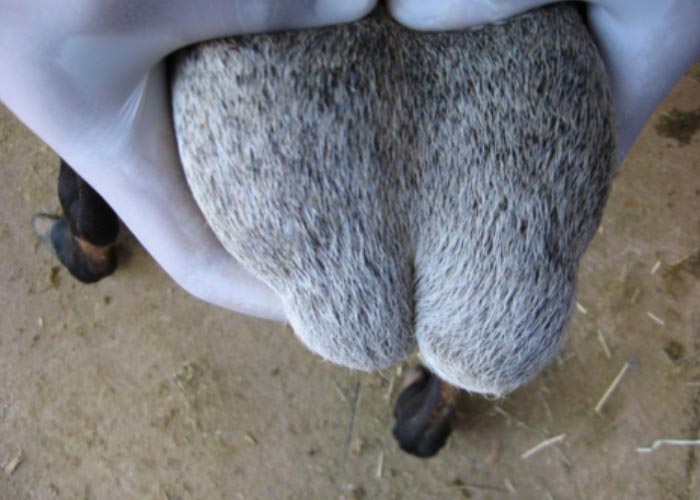
Figure 1 Asymmetry and enlargement of the tail of the epididymis (Courtesy of R L Santos Professor, DVM, PhD, Universidade Federal de Minas Gerais, Escola de Veterinária, Departamento de Clínica e Cirurgia Veterinárias, Av. Antonio Carlos 6627, Minas Gerais, 31270-901, Brazil)
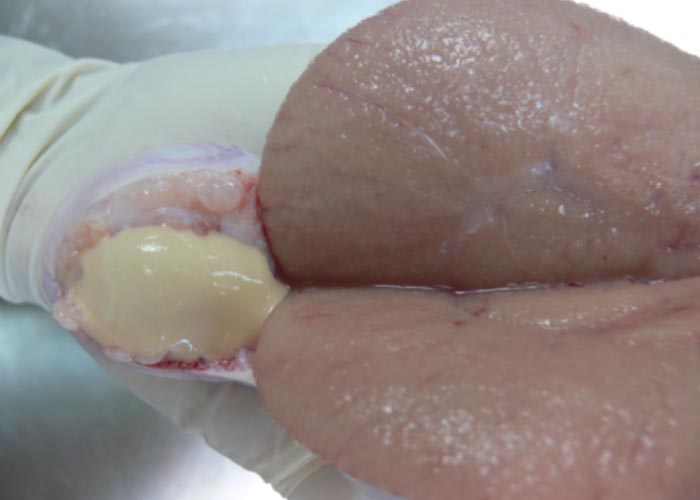
Figure 2 Spermatic granuloma of the tail of the epididymis in a case of Brucella ovis infection (Courtesy of R L Santos Professor, DVM, PhD, Universidade Federal de Minas Gerais, Escola de Veterinária, Departamento de Clínica e Cirurgia Veterinárias, Av. Antonio Carlos 6627, Minas Gerais, 31270-901, Brazil)
Pathology
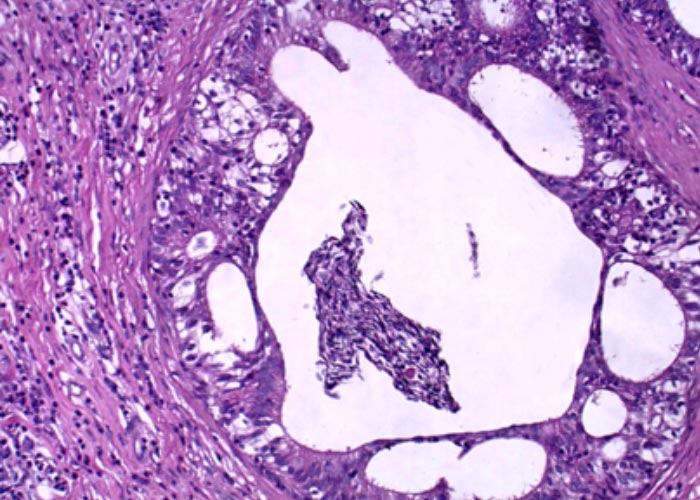
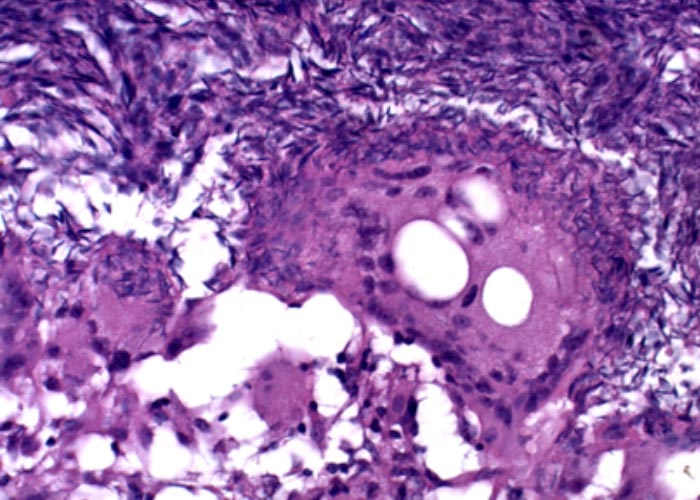
Typical lesions in the affected epididymis include solitary or multiple spermatocoeles and spermatic granulomas, which contain a creamy fluid or inspissated, caseous material (Figure 2), thickening due to the presence of a low-grade, non-purulent inflammatory response (Figures 3 and 4), and fibrosis of the interductal connective tissue and the tunica albuginea. In most cases fibrous adhesions form between the tail of the epididymis, the parietal tunica vaginalis and the distal pole of the testis.78
Testicular degeneration and atrophy, which is usually more severe in rams with widespread and severe adhesions, may accompany the epididymal lesions.62, 78 In most cases, however, the changes in the testis are minimal and non-specific.9 Changes in the vas deferens and accessory sex glands may be similar to those in the epididymis.
Semen quality is determined by the extent and severity of the lesions in the epididymides, testes, and accessory glands.5, 62, 63, 64, 99 Poor semen quality is characterized by reduced density of the ejaculate (due to decreased numbers of spermatozoa), reduced motility and longevity of spermatozoa, an increase in the proportion of abnormal spermatozoa such as those with detached sperm heads, midpiece abnormalities, bent tails, coiled tails, and tails tightly coiled around the heads of spermatozoa37, 38, 109 and the presence, in many cases, of varying numbers of leukocytes, particularly neutrophils.5, 64, 86, 108, 109
The carcasses of aborted lambs are not autolysed but are dehydrated, and they manifest fibrinous peritonitis. The accompanying placentitis is characterized by a yellowish fibrinous exudate that is present particularly in the intercotyledonary areas. Histologically the lesions in the placentas are characterized by multifocal suppurative inflammation.79 Foetal lung tissues manifest suppurative bronchitis, bronchiolitis and bronchopneumonia.68
Diagnosis
The diagnosis of B. ovis infection in sheep includes palpation of the external genitalia of the rams, microscopic examination of stained semen smears, bacteriological culture of semen and exudate from lesions, and serology. Molecular methods are available, including a B.ovis-specific PCR protocol.118
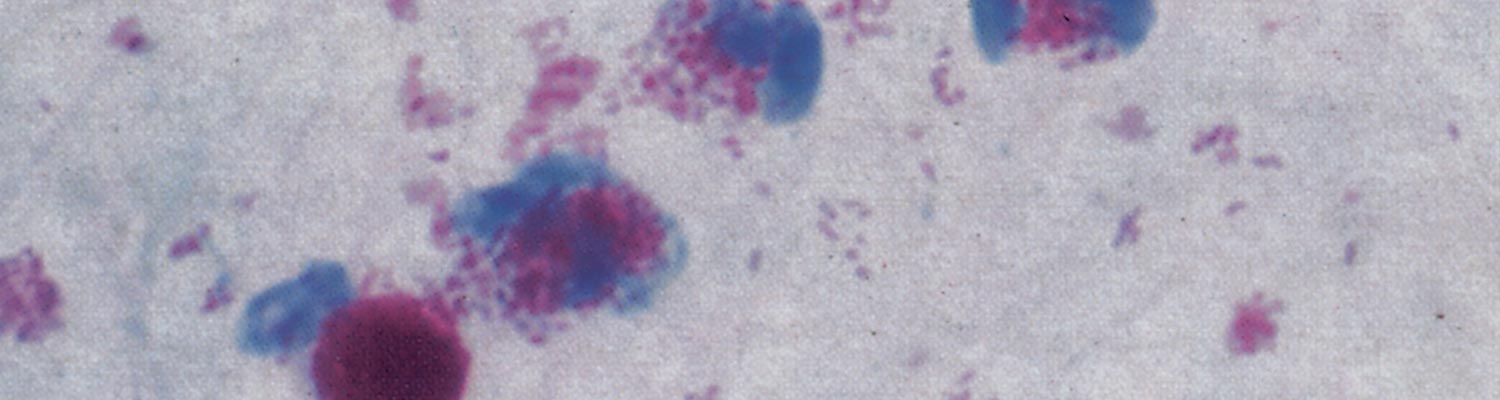
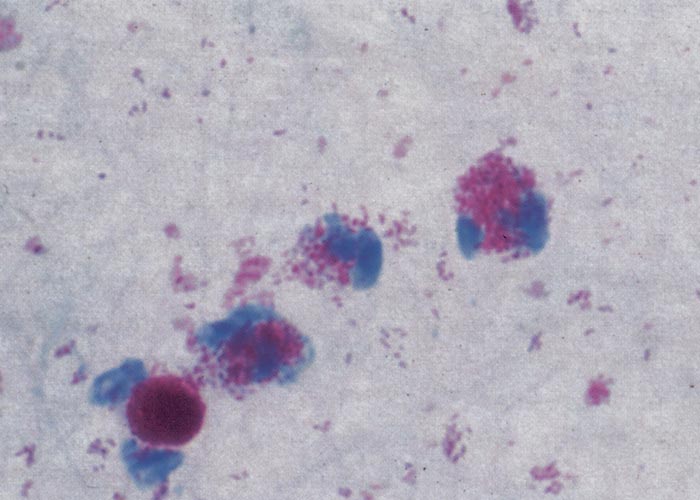
The presence of B. ovis and neutrophils in semen smears stained by the modified Ziehl-Neelsen method,100 particularly rams that are subclinically affected, can be useful for the diagnosis of the disease (Figure 5).21, 87, 102, 107, 115 However, the presence of bacteria causing epididymitis with similar morphology and Ziehl-Neelsen staining characteristics can lead to misdiagnosis. Therefore, immunofluorescence techniques have been developed.1, 28 Although there is usually a good correlation between the presence of neutrophils and B. ovis organisms in semen smears,107, 112 the presence of neutrophils alone is not a reliable diagnostic criterion.19
Brucella ovis may be excreted in semen by only some infected rams and this excretion can be intermittent, limiting the sensitivity of the semen culture for the diagnosis of infection.11, 16, 46
In ewes that have aborted, B. ovis infection can be diagnosed by demonstration of the organisms in smears made from uterine exudate and by bacteriological culture of uterine exudates and milk. In aborted foetuses bacteriological cultures of the abomasal content, spleen, lungs and liver should be made in order to isolate the organism.48, 68
Several serological tests can be applied to the diagnosis of B. ovis.4, 11, 31 The most efficient and widely used tests are the agar gel immunodiffusion (AGID), complement fixation test (CFT), and the indirect enzyme-linked immunosorbent assay (ELISA). Several countries have adopted various standard diagnostic techniques for B. ovis, but for international trade, the only test prescribed by the OIE,4 and the European Union is the CFT. However, it has been demonstrated that the AGID test shows similar sensitivity to the CFT,88, 116, 117 and that it is easier to perform and is very practical for routine diagnosis in non-specialized laboratories.73 Numerous independent studies have shown that the ELISA is more sensitive and specific than either the CFT or AGID test,44, 65, 66, 67, 70, 73, 91, 94, 116, 117, 118 but to date, no standardization of such tests exists.4
Most of the serological tests for the diagnosis of smooth colony Brucella spp. infections (i.e. B. melitensis, B. abortus and B. suis) have been developed to detect antibodies directed against antigens associated with the smooth lipopolysaccharide (S-LPS) that is absent in the naturally rough B. ovis. Thus, specific antigen preparations for the diagnosis of B. ovis have been developed. When rough Brucella cells are heat-extracted with saline — hot-saline (HS) method — they yield water-soluble antigenic extracts whose major component precipitates with sera to rough Brucella spp.11 For this reason, the B. ovis HS extract has been referred to as the ‘B. ovis-specific antigen’, containing rough lipopolysaccharide (R-LPS) antigens specific for B. ovis. The HS extract, due to its water solubility and high content of relevant cell surface epitopes, is accepted as the best diagnostic antigen and has been widely used for the serological diagnosis of B. ovis infection.4 However, the HS extracts also contain additional antigenic components, some of which are shared by rough and smooth B. melitensis and other Brucella spp.11 Such components account for the cross-reactivity that is sometimes observed with the HS method and sera of sheep infected with B. melitensis or vaccinated with Rev. 1.70
Although false negative9 and false positive results occur with the CFT, no false positives have been encountered in flocks known to be free of the disease,54 but they do occur in infected flocks.54, 95 Moreover, the CFT has other important disadvantages such as complexity, obligatory serum inactivation, anticomplementary activity of some sera, difficulty to perform with haemolysed sera, and prozone phenomena.
Brucella ovis is mainly detected by PCR or bacteriology in sexual organs and regional lymph nodes, and only rarely at systemic sites of infection.4 The B. ovis specific PCR assay is suitable for routine diagnosis of this disease, allowing a concurrent differential diagnosis with B. melitensis, and it can be used as an alternative to bacterial isolation. 118
Differential diagnosis
The impact of bacterial infections of the genital system of rams can be extremely important, particularly if infected rams are not properly diagnosed in time, and are allowed to enter into the mating period.45
The clinical examination of external genitalia is largely non-specific because there are many other causes of epididymitis. Epididymitis in rams as a result of B. ovis should be differentiated from similar lesions caused by Actinobacillus seminis,8 Actinobacillus actinomycetemcomitans,35 other Actinobacillus spp.,39 Histophilus somni (formerly known as Histophilus ovis, Haemophilus somnus, or Haemophilus agni),20, 27, 119 Corynebacterium pseudotuberculosis,20 Chlamydia spp.93 and other Haemophilus spp.15, 54, 55, 56, as recently reviewed. 45 Nodular enlargement of the epididymis and testes detected clinically may also be caused by trauma,88 paradidymal cysts, Cysticercus tenuicollis cysts, Sertoli-cell tumours and seminomas,96, 97, 111, 112 and by spermatocoeles and spermatic granulomas resulting from non-infectious causes.61 Nodular enlargement within the scrotum due to varicocele should also be considered.
Control
Control is based on the elimination of infected animals, vaccination, or a combination of the two approaches.63, 81, 94, 99, 107
Control programmes are aimed at preventing infection from taking place as well as eliminating infected rams. Management procedures such as the rearing and weaning of male replacement lambs in isolation from other rams, particularly breeding rams, timely weaning of ram lambs, early replacement of older rams, avoidance of the use of susceptible young rams in multiple-sire breeding systems, testing of rams before the mating season, and introduction only of tested and/or vaccinated rams, are important in the control of the disease.
Brucellosis due to B. ovis should not be considered as an exclusive infection of rams and could be present in a certain proportion of ewes in some infected flocks.69 Although the precise mechanism of transmission has not been established, the maintenance of infection in some flocks submitted to exclusive testing and culling of infected rams can be due to the existence of infection in ewes.69 Accordingly, in these ‘problem flocks’, ewes should be included in any B. ovis control programme.
Vaccination with the Rev. 1 mutant strain of B. melitensis51, 52 was introduced into South Africa by Van Drimmelen,104 and has proved to be highly effective in preventing B. ovis infection.50, 85, 105, 106 In South Africa, ram lambs of between two and four months old should be vaccinated.40, 42, 46, 51, 52, 103 The induced immunity against B. ovis infection lasts for up to four years.41, 46, 105, 106 In areas where B. melitensis infections are known to exist, the use of the Rev. 1 vaccine by the conjunctival route, as opposed to the subcutaneous route, may be advisable in rams, as the conjunctival inoculation results in similar immunity while minimizing the post-vaccinal serological response in serological tests for B. melitensis, thus reducing the serological interference in diagnostic tests.4, 71
The main problem of Rev. 1 is that its use may be prohibited in countries free from B. melitensis, and other vaccines, if available, should be used. However, no other vaccine than the Rev. 1 is recommended by the OIE.4
The live smooth Brucella suis strain 2 (Chinese vaccine) and the live rough B. abortus RB51 vaccine do not confer adequate protection against B. ovis in rams.13, 59 Some degree of efficacy against B. ovis has been shown using inactivated vaccines. A vaccine containing aluminium hydroxide-adsorbed B. ovis bacteria probably only protects rams from the clinical disease and does not prevent the establishment of a carrier state.10 Another inactivated vaccine in special adjuvants has been shown to be as effective as Rev. 1 against B. ovis in rams.12 These inactivated vaccines are not available in South Africa.
In the European Union, no compulsory surveillance for the disease is done in flocks. Neither an eradication programme nor a compensation scheme for culling animals in infected flocks is foreseen. 84
The treatment of B. ovis-infected rams with long-acting oxytetracycline and dihydrostreptomycin results in a reduction in the shedding of the pathogen in the semen,33, 72 but it is expensive and conclusive elimination of the infection from all rams has not been proven. However, addition of antibiotics (i.e. penicillin and streptomycin or gentamicin) to cryopreserved semen inactivates B. ovis, and therefore it may be a suitable control measure where artificial insemination is employed.80
References
- AJAI, C. O., COOK, J. E., & DENNIS, S. M., 1980. Diagnosing ovine epididymitis by immunofluorescence. The Veterinary Record, 107, 421-424.
- ALTON, G.G., JONES, L.H., ANGUS, R.D. & VERGER, J.M., 1988. Techniques for the Brucellosis Laboratory. 1st edn. Paris: Institut National de la Recherche Agronomique.
- ALVAREZ L.P, GARCÍA-EFFRÓN, G., & ROBLES, C. A., 2016. Identification of Brucella ovis exclusive genes in field isolates from Argentina. Veterinary Journal, 209, 196-198. doi: 10.1016/j.tvjl.2015.12.005.
- ANON, 2012. Manual of Standards for Diagnostic Tests and Vaccines. 4th edn. Paris: Office International des Epizooties.
- BAGLEY, C. V., BURRELL, W. C., ESPLIN, G. M., & WALTERS, J. L., 1984. Effect of epididymitis on semen quality of rams. Journal of the American Veterinary Medical Association, 185, 876-877.
- BAGLEY, C. V., PASKETT, M. E., MATTHEWS, N. J., & STENQUIST, N. J., 1985. Prevalence and causes of ram epididymitis in Utah. Journal of the American Veterinary Medical Association, 186, 798-801.
- BARRON, S. J., KOCAN, A. A., MORTON, R. J., THEDFORD, T. R., & MCCAIN, C. S., 1985. Susceptibility of male white-tailed deer (Odocoileus virginianus) to Brucella ovis infection. American Journal of Veterinary Research, 46, 1762-1764.
- BAYNES, I. D. & SIMMONS, G. C., 1960. Ovine epididymitis caused by Actinobacillus seminis n. sp. Australian Veterinary Journal, 36, 454-459.
- BIBERSTEIN, E. L., MCGOWAN, B., OLANDER, H., & KENNEDY, P. C., 1964. Epididymitis in rams: Studies on pathogenesis. Cornell Veterinarian, 54, 27-41.
- BIBERSTEIN, E. L., MCGOWAN, B., ROBINSON, E. A., & HARROLD, D. R., 1962. Epididymitis in rams: Studies on immunity. Cornell Veterinarian, 52, 214-227.
- BLASCO, J. M., 1990. Brucella ovis. In: nielsen, k. & duncan, j.r., (eds). C.R.C. Animal Brucellosis, 351-382. Boca Raton: CRC Press.
- BLASCO, J. M., GAMAZO, C., WINTER, A. J., JIMENEZ, D. E., BAGÜES, M. P., MARÍN, C. M., BARBERAN, M., MORIYON, I., ALONSO-URMENETA, B., & DIAZ, R., 1993. Evaluation of whole cell and subcellular vaccines against Brucella ovis in rams. Veterinary Inmunology and Inmunopathology, 37, 257-270.
- BLASCO, J.M., MARÍN, C.M., J. DE BAGÜES, M.P. & BARBERAN, M., 1993. Efficacy of Brucella suis strain 2 vaccine against Brucella ovis in rams. Vaccine, 11, 1291-1294.
- BROWN, G. M., PIETZ, D. E., & PRICE, D. A., 1973. Studies on the transmission of Brucella ovis infection in rams. Cornell Veterinarian, 63, 29-40.
- BRUSS, M. L., BULGIN, M. S., & ANDERSON, B. S., 1981. Ram epididymitis caused by Haemophilus-like bacteria. Proceedings of the Second Annual Western Conference for Food Animal Veterinary Medicine, Fort Collins, Colorado, 1981.
- BUDDLE, M. B., 1955. Observations on the transmission of Brucella infection in sheep. New Zealand Veterinary Journal, 3, 10-19.
- BUDDLE, M. B., 1956. Studies on Brucella ovis (n. sp.), a cause of genital disease of sheep in New Zealand and Australia. The Journal of Hygiene, 54, 351-364.
- BUDDLE, M. B. & BOYES, B. W., 1953. A Brucella mutant causing genital disease of sheep in New Zealand. Australian Veterinary Journal, 29, 145-153.
- BULGIN, M. S., 1990. Brucella ovis excretion in semen of seronegative, clinically normal breeding rams. Journal of the American Veterinary Medical Association, 196, 313-315.
- BULGIN, M. S. & ANDERSON, B. C., 1983. Association of sexual experience with isolation of various bacteria in cases of ovine epididymitis. Journal of the American Veterinary Medical Association, 182, 372-374.
- BURGESS, G. W. & NORRIS, M. J., 1982. Evaluation of the cold complementfixation test for diagnosis of ovine brucellosis. Australian Veterinary Journal, 59, 23-25.
- BURGESS, G.W., MCDONALD, J.W. & NORRIS, M.J., 1982. Epidemiological studies on ovine brucellosis in selected ram flocks. Australian Veterinary Journal, 59, 45-47.
- BURGESS, G.W., SPENCER, T.L. & NORRIS, M.J., 1985. Experimental infection of goats with Brucella ovis. Australian Veterinary Journal, 62, 262-264.
- CARVALHO JÚNIOR, C. A., MOUSTACAS, V. S., XAVIER, M. N., COSTA, E. A., COSTA, L. F., SILVA, T. M. A., PAIXÃO, T. A., BORGES, A. M., GOUVEIA, A. M. G., & SANTOS, R. L., 2012. Andrological, pathologic, morphometric, and ultrasonographic findings in rams experimentally infected with Brucella ovis. Small Ruminant Research, 102, 213- 222.
- CLAPP, K.H., KEOGH, J. & DOOLETTE, J.B., 1957. Ovine brucellosis (1) Epidemiology. Annual Report, Institute of Medical and Veterinary Science, South Australia, 61-65.
- CLAPP, K.H., KEOGH, J. & RICHARDS, R.D.A., 1962. Epidemiology of ovine brucellosis in South Australia. Australian Veterinary Journal, 38, 482-486.
- CLAXTON, P. D. & EVERETT, R. E., 1966. Recovery of an organism resembling Haemophilus ovis from a ram. Australian Veterinary Journal, 42, 457-458.
- COONS, A. H. & KAPLAN, M. H., 1950. Localization of antigen in tissue cells. II. Improvements in a method for the detection of antigens by means of fluorescent antibody. Journal of Experimental Medicine, 91, 591-597.
- CORBELL, M.J., GILL, K.P.W. & THOMAS, E.L., REVISED BY CORBELL, M.J. & HENDRY, D., 1983. Methods for the Identification of Brucella. Central Veterinary Laboratory, Weybridge, Surrey, England,
- COSTA, L.F., PESSOA, M.S., GUIMARÃES, L.B., FARIA, A.K., MORÃO, R.P., MOL, J.P., GARCIA, L.N., ALMEIDA, A.C., GOUVEIA, A.M., SILVA, M.X., PAIXÃO, T.A. & SANTOS, RL., 2016. Serologic and molecular evidence of Brucella ovis infection in ovine and caprine flocks in the State of Minas Gerais, Brazil. BMC Research Notes, 2016, 9, 190-194. doi: 10.1186/s13104-016-1998-2.
- COX, J. C., GRORRIE, C. J. R., NAIRN, R. C., & WARD, H. A., 1977. A comparison of methods for the serological diagnosis of Brucella ovis infection. British Veterinary Journal, 133, 442-445.
- CRENSHAW, G.L., SCHULTZ, G., BILLS, C.J., CAMERON, H.S. & TIMM, O., 1963. Ram epididymitis in California. California Veterinarian, 17, 42-44.
- DARGATZ, D. A., SMITH, J. A., KNIGHT, A. P., FARIN, P. W., & KIMBERLING, C. V., 1990. Antimicrobial therapy for rams with Brucella ovis infection of the urogenital tract. Journal of the American Veterinary Medical Association, 196, 605-610.
- DE WET, J. A. L. & ERASMUS, J. A., 1984, Epididymitis of rams in the central and southern districts of the Orange Free State. Journal of the South African Veterinary Association, 55, 173-179.
- DELONG, W.J., WALDHALM, D.G. & HALL, R.F., 1979. Bacterial isolates associated with epididymitis in rams from Idaho and eastern Oregon flocks. American Journal of Veterinary Research, 40, 101-102.
- DORNELES, E. M., FREIRE, G. N., DASSO, M. G., POESTER, F. P., & LAGE, A. P., 2014. Genetic diversity of Brucella ovis isolates from Rio Grande do Sul, Brazil, by MLVA16. BMC Research Notes, 7, 447-451. doi: 10.1186/1756-0500-7-447.
- EDGAR, D. G., 1959. The detection of Brucella ovis infection in rams. New Zealand Veterinary Journal, 7, 64-66.
- EDGAR, D. G., 1959. Examination of rams for fertility. New Zealand Veterinary Journal, 7, 61-63.
- EKDAHL, M.O., MONEY, D.F.L. & MARTIN, C.A., 1968. Some aspects of epididymitis of rams in New Zealand. New Zealand Veterinary Journal, 16, 81-82.
- ELBERG, S. S. & MEYER, K. F., 1958. Caprine immunization against brucellosis: A summary of experiments on the isolation, properties and behaviour of a vaccine strain. Bulletin of the World Health Organization, 19, 711-724.
- ERASMUS, J. A. & BERGH, E. C., 1985. Ovine brucellosis: Repeated vaccination with Rev. 1 vaccine and the prevalence of the disease in the Winburg district. 56, 205-208.
- FENSTERBANK, R., PARDON, P. & MARLY, J., 1982. Efficacy of Brucella melitensis Rev. 1 vaccine against Brucella ovis infection in rams. Annales Recherches Véterinaires, 13, 185-190.
- GARCIA-CARILLO, C., CASAS-OLASCOAGA, R., CUBA-CAPARO, A., LUCERO, N., & SZYFRES, B., 1977. Infection experimental de caprinos machos con Brucella ovis. Estudio bacteriologica, serologico e histopatologico. Revista de la Asociacion Argentina de Microbiologia, 9, 101-108.
- GILL, T. J., 1970. Methods for detecting antibody. Immunochemistry, 7, 997-1000.
- GOULETSOU, P. G. & FTHENAKIS, G. C., 2015. Microbial diseases of the genital system of rams or bucks. Veterinary Microbiology, 181, 130-135. doi:10.1016/j.vetmic.2015.07.016.
- GRADWELL, D. V. & VAN ZYL, F. E., 1975. Effectivity of Rev. 1 vaccine in rams against Brucella ovis infection. Journal of the South African Veterinary Association, 46, 349-351.
- GRILLO, M. J., MARIN, C., BARBERAN, M., & BLASCO, J. M., 1999. Experimental Brucella ovis infection in pregnant ewes. The Veterinary Record, 144, 555-558.
- HARTLEY, W. J., 1961. The pathology of Brucella ovis infection in the pregant ewe. New Zealand Veterinary Journal, 9, 115-120.
- HARTLEY, W.J., JEBSON, J.L. & MACFARLANE, D., 1955. Some observations on natural transmission of ovine brucellosis. New Zealand Veterinary Journal, 3, 5-10.
- HERR, S., PIETERSON, M. P., GUMMOW, B., PEFANIS, S. M., & VENTER, C. G., 1987. A Brucella melitensis similar to Rev. 1. Research in Reproduction, 7.
- HERZBERG, M. & ELBERG, S. S., 1953. Immunization against brucella infection. I. Isolation and characterization of a streptomycin-dependent mutant. Journal of Bacteriology, 66, 585-599.
- HERZBERG, M. & ELBERG, S. S., 1955. Immunization against brucella infection. III. Response of mice and guinea-pigs to injection of viable and nonviable suspensions of a streptomycin-dependent mutant of Brucella melitensis. Journal of Bacteriology, 69, 432-435.
- HUGHES, K. L., 1972. Experimental Brucella ovis infection in ewes. I. Breeding performance of infected ewes. Australian Veterinary Journal, 48, 12-17.
- HUGHES, K. L. & CLAXTON, P. D., 1968. Brucella ovis infection. I. An evaluation of microbiological, serological and clinical methods of diagnosis in the ram. Australian Veterinary Journal, 44, 41-47.
- JANSEN, B. C., 1980. The aetiology of ram epididymitis. Onderstepoort Journal of Veterinary Research, 47, 101-107.
- JANSEN, B. C., 1983. The epidemiology of bacterial infection of the genitalia of rams. Onderstepoort Journal of Veterinary Research, 50, 275-282.
- JEBSON, J. L., HARTLEY, W. J., MCCLURE, T. J., & MCFARLANE, D., 1955. Pathology of brucellosis in rams in New Zealand. New Zealand Veterinary Journal, 3, 100-104.
- JEBSON, J.L., HARTLEY, W.J. & MCFARLANE, D., 1954. The artificial infection of sheep with a Brucella-like organism. Part II. The artificial infection of rams. New Zealand Veterinary Journal, 2, 80-89.
- JIMENEZ DE BAGÜES, M.P., BARBERAN, M., MARÍN, C.M. & BLASCO, J.M., 1995. The Brucella abortus RB51 vaccine does not confer protection against Brucella ovis in rams. Vaccine, 13, 301-304.
- JOINT FAO/WHO EXPERT COMMITTEE ON BRUCELLOSIS, 1986. World Health Organization Technical Report Series. 740, WHO, Geneva.
- JUBB, K. V. F., KENNEDY, P. C., & PALMER, N., 2007, Pathology of Domestic Animals. 5rd edn. Vol. III. New York, London: Academic Press,
- KENNEDY, P.C., FRAXIER, L.M. & MCGOWAN, B., 1956. Epididymitis in rams: Pathology and bacteriology. Cornell Veterinarian, 46, 303-309.
- KEOGH, J., DOOLETTE, J. B., & CLAPP, K. H., 1958. The epidemiology of ovine brucellosis in South Australia. Australian Veterinary Journal, 34, 412-423.
- KIMBERLING, C. V., ARNOLD, S. K., SCHWEITZER, D. J., JONES, R. L., VON, B. H., & LUCAS, M., 1986. Correlation of the presence of seminal white blood cells and the prevalence of separated spermatozoal heads with subclinical Brucella ovis infection in rams. Journal of the American Veterinary Medical Association, 189, 73-76.
- KITTELBERGER, R., DIACK, D. S., VIZCAINO, N., ZYGMUNT, M. S., & CLOECKAERT, A., 1998. Characterization of an immuno-dominant antigen in Brucella ovis and evaluation of its use in an enzyme-linked immunosorbent assay. Veterinary Microbiology, 59, 213-227.
- LAWRENCE, W. E., 1961. Ovine brucellosis: A review of the disease in sheep manifested by epididymitis and abortion. British Veterinary Journal, 117, 435-447.
- LEE, K., CARGILL, C., & ATKINSON, H., 1985. Evaluation of an enzyme-linked immunosorbent assay for the diagnosis of Brucella ovis infection in rams. Australian Veterinary Journal, 62, 91-93.
- LIBAL, M. C. & KRIKBRIDE, C. A., 1983. Brucella ovis-induced abortion in ewes. Journal of the American Veterinary Medical Association, 183, 553-554.
- MARCO, J., GONZALEZ, L., CUERVO, L. A., BELTRAN, D. E., HEREDIA, F., BARBERAN, M., MARÍN, C. M., & BLASCO, J. M., 1994. Brucella ovis infection in two flocks of sheep. The Veterinary Record, 135, 254-256.
- MARÍN, C. M., ALONSO-URMENETA, B., MORIYON, I., PEREZ, S., & BLASCO, J. M., 1998. Comparison of polyclonal, monoclonal and protein G peroxidase conjugates in an enzyme-linked immunosorbent assay for the diagnosis of Brucella ovis in sheep. The Veterinary Record, 143, 390-394.
- MARIN, C. M., BARBERAN, M., JIMENEZ, D., BAGUES, M. P., & BLASCO, J. M., 1990. Comparison of subcutaneous and conjunctival routes of Rev. I vaccination for the prophylaxis of Brucella ovis infection in rams. Research in Veterinary Science, 48, 209-215.
- MARIN, C. M., JIMENEZ DE BAGUES, M. P., BARBERAN, M., & BLASCO, J. M., 1989. Efficacy of long-acting oxytetracycline alone or in combination with streptomycin for treatment of Brucella ovis infection of rams. American Journal of Veterinary Research, 50, 560-563.
- MARÍN, C. M., JIMENEZ, D. E., BAGÜES, M. P., BLASCO, J. M., GAMAZO, C., MORIYON, I., & DIAZ, R., 1989. Comparison of three serological tests for B. ovis infection of rams using different antigenic extracts. The Veterinary Record, 125, 504-508.
- MCFARLANE, D., SALISBURY, R. M., OSBORNE, H. G., & JEBSON, J. L., 1952. Investigation into sheep abortion in New Zealand during the 1950 lambing season: Ram epididymitis, ewe abortion and lamb neonatal mortality. Australian Veterinary Journal, 28, 221-226.
- MCGOWAN, B. & SCHULTZ, G., 1956. Epididymitis of rams: Clinical description and field aspects. Cornell Veterinarian, 46, 277-281.
- MEINERSHAGEN, W. A., FRANK, F. W., & WALDHALM, D. G., 1974. Brucella ovis as a cause of abortion in ewes. American Journal of Veterinary Research, 35, 723-724.
- MEYER, M. E., 1966. Identification of Brucella organisms by immunofluorescence. American Journal of Veterinary Research, 27, 424-429.
- MILLER, S. J. & MOULE, G. R., 1954. Clinical observations on the reproductive organs of Merino rams in pastoral Queensland. Australian Veterinary Journal, 30, 353-363.
- MOLLELO, J. A., JENSEN, R., FLINT, J. C., & COLLIER, J. R., 1963. Placental pathology. I. Placental lesions of sheep experimentally infected with Brucella ovis. American Journal of Veterinary Research, 24, 897-903.
- MOUSTACAS, V.S., XAVIER, M.N., CARVALHO-JÚNIOR, C.A., COSTA, E.A., HENRY, M. & SANTOS, R.L., 2010. Effect of extender supplementation with various antimicrobial agents on viability of Brucella ovis and Actinobacillus seminis in cryopreserved ovine semen. Theriogenology, 74, 1476-1481. doi: 10.1016/j.theriogenology.2010.06.019.
- MURRAY, R. M., 1969. Scrotal abnormalities in rams in tropical Queensland with particular reference to ovine brucellosis and its control. Australian Veterinary Journal, 45, 63-67.
- OSBORNE, H. G., 1955. Epididymitis of rams. Australian Veterinary Journal, 31, 11-16.
- PETROVIC, M., SPICIC, S., POTKONJAK, A., LAKO, B., KOSTOV, M., & CVETNIC, Z., 2014. First evidence of Brucella ovis infection in rams in the Pirot Municipality, Serbia. Veterinaria Italiana, 50, 259-268. doi: 10.12834/VetIt.1305.09.11.
- Picard-Hagen, N., Berthelot, X., Champion, J.L., Eon, L., Lyazrhi, F., Marois, M., Peglion, M., Schuster, A., Trouche, C. & Garin-Bastuji, B., 2015. Contagious epididymitis due to Brucella ovis: relationship between sexual function, serology and bacterial shedding in semen. BMC Veterinary Research, 11, 125-132. doi: 10.1186/s12917-015-0440-7.
- PIETERSON, P.M., GUMMOW, B., PEFANIS, S., VENTER, C.G. & HERR, S., 1988. The characteristics of a variant strain of Brucella melitensis Rev 1. Onderstepoort Journal of Veterinary Research, 55, 15-17.
- PLANT, J. W., 1974. Ovine brucellosis—still a cause of Infertility. Agricultural Gazette of New South Wales, 85, 1-4.
- PLANT, J. W., EAMENS, G. J., & SEAMAN, J. T., 1986. Serological, bacteriological and pathological changes in rams following different routes of exposure to Brucella ovis. Australian Veterinary Journal, 63, 409-412.
- PULSFORD, M. F., EASTICK, B. C., CLAPP, K. H., & ROBERTS, R., 1967. Traumatic epididymitis of Dorset Horn and Poll Dorset rams. Australian Veterinary Journal, 43, 99-101.
- RIDLER, A. L., WEST, D. M., & COLLETT, M. G., 2012. Pathology of Brucella ovis infection in red deer stags (Cervus elaphus). New Zealand Veterinary Journal, 60, 146-149. doi: 10.1080/00480169.2011.638269.
- RIDLER, A. L., WEST, D. M., STAFFORD, K. J., WILSON, P. R., & FENWICK, S. G., 2000. Transmission of Brucella ovis from rams to red deer stags. New Zealand Veterinary Journal, 48, 57-59.
- RIEZU-BOJ, J. I., MORIYON, I., BLASCO, J. M., MARIN, C. M., & DIAZ, R., 1986. Comparison of lipopolysaccharide and outer membrane protein-lipopolysaccharide extracts in an enzyme-linked immunosorbent assay for the diagnosis of Brucella ovis infection. Journal of Clinical Microbiology, 23, 938-942.
- ROBLES, C. A., UZAL, F. A., OLAECHEA, F. V., & LOW, C., 1998. Epidemiological observations in a Corriedale flock affected with Brucella ovis. Veterinary Research Communication, 22, 435-443.
- RODOLAKIS, A. & BERNARD, K., 1977. Isolement des Chlamydia des organes génitaux de béliers atteints d’épididymite. Bulletin Académie Vétérinaire France, 50, 65-70.
- RYAN, F. B., 1964. Eradication of ovine brucellosis. Australian Veterinary Journal, 40, 162-165.
- SEARSON, J. E., 1986. Distribution of Brucella ovis in the tissues of rams reacting to the complement fixation test for ovine brucellosis. Australian Veterinary Journal, 63, 30-31.
- SHORTRIDGE, E. H., 1962. The lesions of the testicle and epididymis of rams. New Zealand Veterinary Journal, 10, 23-26.
- SHORTRIDGE, E. H. & CORDES, D. O., 1969. Seminomas in sheep. Journal of Comparative Pathology, 79, 229-232.
- SIMMONS, G. C. & HALL, W. T. K., 1953. Epididymitis of rams. Preliminary studies on the occurrence and pathogenicity of a Brucella-like organism. Australian Veterinary Journal, 29, 33-40.
- SNOWDON, W. A., 1958. The epidemiology of ovine brucellosis in South Australia. Opening of discussion. Australian Veterinary Journal, 34, 417-423.
- STAMP, J.T., MCEWEN, A.D., WATT, J.A.A. & NISBET, D.I., 1950. Enzootic abortion in ewes. I. Transmission of the disease. The Veterinary Record, 62, 251-254.
- TIERNEY, T.J., TREVELLA, W. & SIMPSON-MORGAN, M.W., 1997. The cellular response of lambs to Brucella ovis before and after birth. Veterinary Immunology and Immunopathology, 59, 369-373.
- VAN DRIMMELEN, G. C., 1959. Diagnosis of brucellosis in sheep and goats. Journal of the South African Veterinary Medical Association, 30, 259-269.
- VAN DRIMMELEN, G. C., 1960. Control of brucellosis in sheep and goats by means of vaccination. Journal of the South African Veterinary Medical Association, 31, 129-138.
- VAN DRIMMELEN, G. C., 1974. The distribution, incidence and control of brucellosis in the Republic of South Africa. Bulletin de L’Office International des Epizooties, 82, 97-105.
- VAN HEERDEN, K. M., 1964. Results obtained by the use of Rev. 1 vaccine in sheep against infectious infertility suspected to be caused by ovine brucellosis. Bulletin de L’Office International des Epizooties, 62, 997- 1002.
- VAN HEERDEN, K. M. & VAN RENSBURG, S. W. J., 1962. The immunization of rams against ovine brucellosis. Journal of the South African Veterinary Medical Association, 33, 143-148.
- VAN RENSBURG, S. W. J., VAN HEERDEN, K. M., LE ROUX, D. J., & SNYDERS, A. J., 1958, Infectious infertility in sheep. Journal of the South African Veterinary Medical Association, 39, 223-233.
- VAN TONDER, E. M., 1977. Actinobacillus seminis infection in sheep in South Africa. D.V.Sc. Thesis, University of Pretoria,
- VAN TONDER, E. M., 1977. Examination of rams for genital soundness. Journal of the South African Veterinary Medical Association, 48, 267-272.
- WALKER, R. L., LEAMASTER, B. R., STELLFLUG, J. N., & BIBERSTEIN, E. L., 1986. Association of age of ram with distribution of epididymal lesions and etiologic agent. Journal of the American Veterinary Medical Association, 188, 393-396.
- WATT, D. A., 1971. Congenital retention cysts of the epididymis in rams. Australian Veterinary Journal, 47, 287-288.
- WATT, D. A., 1971. Seminoma in a sheep. Australian Veterinary Journal, 47, 405-406.
- WATT, D. A., 1972. Testicular abnormalities and spermatogenesis of the ovine and other species. Veterinary Bulletin, Weybridge, 42, 181-190.
- WATTS, P. S., 1955. Genital infections in sheep with particular reference to Brucella-like organisms. Australian Veterinary Journal, 31, 1-6.
- WEBB, R.F., QUINN, C.A., COCKRAM, F.A. & HUSBAND, A.J., 1980. Evaluation of procedures for the diagnosis of Brucella ovis infection in rams. Australian Veterinary Journal, 56, 172-175.
- WORTHINGTON, R.W., STEVENSON, B.J. & DE LISLE, G.W., 1985. Serology and semen culture for the diagnosis of Brucella ovis infection in chronically infected rams. New Zealand Veterinary Journal, 33, 84-86.
- WORTHINGTON, R.W., WEDDELL, W. & PENROSE, M.E., 1984. A comparison of three serological tests for the diagnosis of B. ovis infection in rams. New Zealand Veterinary Journal, 32, 58-60.
- XAVIER, M. N., SILVA, T. M., COSTA, E. A., PAIXÃO, T. A., MOUSTACAS, V. S., CARVALHO, C. A. J. R., SANT'ANNA, F. M., ROBLES, C. A., GOUVEIA, A. M., LAGE, A. P., TSOLIS, R. M., & SANTOS, R. L., 2010. Development and evaluation of a species-specific PCR assay for the detection of Brucella ovis infection in rams. Veterinary Microbiology, 145, 158-164. doi: 10.1016/j.vetmic.2010.02.037.
- ZEKI, S., KUMAR, K.G.R. & KESHAVAMURTHY, B.S., 1981. Isolation of Haemophilus agni from cases of purulent orchitis in rams. Indian Journal of Comparative Microbiology, 2, 30-31.