- Infectious Diseases of Livestock
- Part 3
- Mycoplasmal arthritis of pigs
- GENERAL INTRODUCTION: SPIROCHAETES
- Swine dysentery
- Borrelia theileri infection
- Borrelia suilla infection
- Lyme disease in livestock
- Leptospirosis
- GENERAL INTRODUCTION: AEROBIC ⁄ MICRO-AEROPHILIC, MOTILE, HELICAL ⁄ VIBROID GRAM-NEGATIVE BACTERIA
- Genital campylobacteriosis in cattle
- Proliferative enteropathies of pigs
- Campylobacter jejuni infection
- GENERAL INTRODUCTION: GRAM-NEGATIVE AEROBIC OR CAPNOPHILIC RODS AND COCCI
- Moraxella spp. infections
- Bordetella bronchiseptica infections
- Pseudomonas spp. infections
- Glanders
- Melioidosis
- Brucella spp. infections
- Bovine brucellosis
- Brucella ovis infection
- Brucella melitensis infection
- Brucella suis infection
- Brucella infections in terrestrial wildlife
- GENERAL INTRODUCTION: FACULTATIVELY ANAEROBIC GRAM NEGATIVE RODS
- Klebsiella spp. infections
- Escherichia coli infections
- Salmonella spp. infections
- Bovine salmonellosis
- Ovine and caprine salmonellosis
- Porcine salmonellosis
- Equine salmonellosis
- Yersinia spp. infections
- Haemophilus and Histophilus spp. infections
- Haemophilus parasuis infection
- Histophilus somni disease complex in cattle
- Actinobacillus spp. infections
- Actinobacillus equuli infections
- Gram-negative pleomorphic infections: Actinobacillus seminis, Histophilus ovis and Histophilus somni
- Porcine pleuropneumonia
- Actinobacillus suis infections
- Pasteurella and Mannheimia spp. infections
- Pneumonic mannheimiosis and pasteurellosis of cattle
- Haemorrhagic septicaemia
- Pasteurellosis in sheep and goats
- Porcine pasteurellosis
- Progressive atrophic rhinitis
- GENERAL INTRODUCTION: ANAEROBIC GRAM-NEGATIVE, IRREGULAR RODS
- Fusobacterium necrophorum, Dichelobacter (Bacteroides) nodosus and Bacteroides spp. infections
- GENERAL INTRODUCTION: GRAM-POSITIVE COCCI
- Staphylococcus spp. infections
- Staphylococcus aureus infections
- Exudative epidermitis
- Other Staphylococcus spp. infections
- Streptococcus spp. infections
- Strangles
- Streptococcus suis infections
- Streptococcus porcinus infections
- Other Streptococcus spp. infections
- GENERAL INTRODUCTION: ENDOSPORE-FORMING GRAM-POSITIVE RODS AND COCCI
- Anthrax
- Clostridium perfringens group infections
- Clostridium perfringens type A infections
- Clostridium perfringens type B infections
- Clostridium perfringens type C infections
- Clostridium perfringens type D infections
- Malignant oedema⁄gas gangrene group of Clostridium spp.
- Clostridium chauvoei infections
- Clostridium novyi infections
- Clostridium septicum infections
- Other clostridial infections
- Tetanus
- Botulism
- GENERAL INTRODUCTION: REGULAR, NON-SPORING, GRAM-POSITIVE RODS
- Listeriosis
- Erysipelothrix rhusiopathiae infections
- GENERAL INTRODUCTION: IRREGULAR, NON-SPORING, GRAM-POSITIVE RODS
- Corynebacterium pseudotuberculosis infections
- Corynebacterium renale group infections
- Bolo disease
- Actinomyces bovis infections
- Trueperella pyogenes infections
- Actinobaculum suis infections
- Actinomyces hyovaginalis infections
- GENERAL INTRODUCTION: MYCOBACTERIA
- Tuberculosis
- Paratuberculosis
- GENERAL INTRODUCTION: ACTINOMYCETES
- Nocardiosis
- Rhodococcus equi infections
- Dermatophilosis
- GENERAL INTRODUCTION: MOLLICUTES
- Contagious bovine pleuropneumonia
- Contagious caprine pleuropneumonia
- Mycoplasmal pneumonia of pigs
- Mycoplasmal polyserositis and arthritis of pigs
- Mycoplasmal arthritis of pigs
- Bovine genital mycoplasmosis
- Neurotoxin-producing group of Clostridium spp.
- Contagious equine metritis
- Tyzzer's disease
- MYCOTIC AND ALGAL DISEASES: Mycoses
- MYCOTIC AND ALGAL DISEASES: Pneumocystosis
- MYCOTIC AND ALGAL DISEASES: Protothecosis and other algal diseases
- DISEASE COMPLEXES / UNKNOWN AETIOLOGY: Epivag
- DISEASE COMPLEXES / UNKNOWN AETIOLOGY: Ulcerative balanoposthitis and vulvovaginitis of sheep
- DISEASE COMPLEXES / UNKNOWN AETIOLOGY: Ill thrift
- Eperythrozoonosis
- Bovine haemobartonellosis
Mycoplasmal arthritis of pigs
This content is distributed under the following licence: Attribution-NonCommercial CC BY-NC  View Creative Commons Licence details here
NJ Maclachlan and M-L Penrith (Editors). P Wallgren, Mycoplasmal arthritis of pigs, 2018.
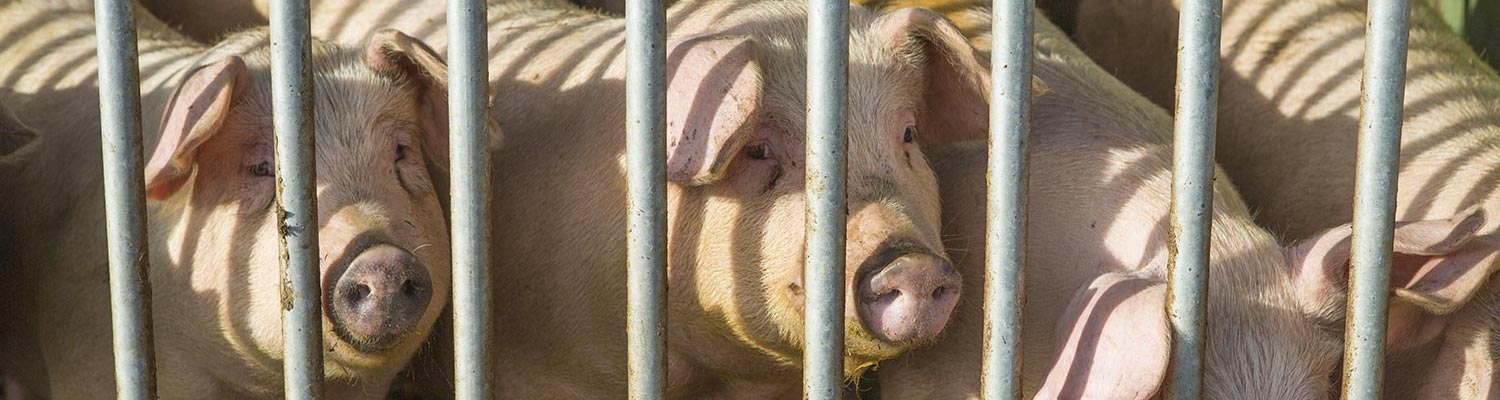
Mycoplasmal arthritis of pigs
Previous authors: P WALLGREN
Current authors:
P WALLGREN - Professor, State Veterinarian, Dipl ECPHM, Department of Animal Health and Antimicrobial Strategies, National Veterinary Institute, Uppsala, 75195, Sweden
Introduction
Mycoplasmal arthritis of pigs caused by Mycoplasma hyosynoviae generally affects pigs during the fattening period. A sudden stiffness or lameness of pigs aged 12 to 26 weeks may indicate an outbreak of the disease which is generally not fatal. One or several joints may be affected. The disease is frequently observed in countries that employ modern pig husbandry methods and monitor for the disease. Mycoplasma hyosynoviae was first identified in the USA14 and Denmark.1 The disease was subsequently diagnosed in several countries such as the UK12 and Germany,16 but it is rarely diagnosed in South Africa.8 Severe outbreaks of bursitis associated with M. hyosynoviae have occurred in Denmark.11
Aetiology
Mycoplasma hyosynoviae grows best in a mycoplasmal medium containing mucin.14 The isolation is facilitated by use of a medium that selectively suppresses the growth of M. hyorhinis.2 In fluid media it produces granules in suspension, a granular deposit and a waxy pellicle. It requires sterol, does not hydrolyse urea, and utilizes arginine. Its growth is enhanced in an atmosphere of reduced oxygen tension during incubation. Colonies of M. hyosynoviae that measure 0,5 to 1mm develop on agar medium within two to four days of cultivation.
For the general characteristics of the mollicutes the General Introduction: Mollicutes should be consulted
Epidemiology
The tonsils serve as a reservoir for M. hyosynoviae,2, 7 and the microbe is common in the upper respiratory tract of sows15 and fatteners.2 Acutely affected animals excrete large numbers of organisms in their mucosal secretions.15
Sows transfer protective antibodies to their piglets via colostrum and transmission of the infection from sow to offspring is therefore rare but does occur.5, 6, 15 Infection occurs most commonly in pigs more than six weeks of age. The disease may affect individual pigs or become epidemic. In the latter case, 10 to 50 per cent of the pigs may be affected before reaching market weight.13
Pathogenesis and clinical signs
A haematogenic spread of M. hyosynoviae is initiated either by release of organisms present in the tonsils or respiratory systems (presumably induced by stress such as cold, transportation, or change in feed) or by intranasal exposure to aerosols from other pigs that shed the organism. The septicaemia persists for eight to ten days,4, 13 and one or more joints may be infected during this phase, with the development of an acute arthritis. In experimentally induced cases the organism has been re-isolated 24 days post-inoculation from such joints.13
A sudden onset of lameness in one or more limbs of fattening pigs (generally aged 12 to 26 weeks) is typical of the disease. Soft, swellings of the tibio-tarsal joints have been observed among most of the pigs affected by M. hyosynoviae.8 Although an affected animal moves with difficulty, the diagnosis may be obscured by the fact that affected joints are not necessarily obviously swollen. The body temperature is generally normal but affected pigs may lose weight due to inappetence during the acute stage of the disease. The acute stage of the disease persists for three to ten days, whereafter the lameness gradually decreases.4 Persistent signs of lameness may occur if an infected pig is also affected by osteochondosis which may be common in the age categories of pigs that are likely to suffer from mycoplasmal arthritis.13
Pathology
The synovial membranes of affected joints are swollen, oedematous and hyperaemic and the volume of synovial fluid is markedly increased during the acute stage of the disease. The fluid is serofibrinous to serosanguinous in nature. Irregular erosions in the joint cartilage may be seen. Such lesions are, however, probably caused by osteochondrosis rather than induced by M. hyosynoviae.13
The lesions following infection with M. hyosynoviae are often mild and may therefore not be noticed during routine inspections in abattoirs. For example, in one farrow to finish herd in which arthritis was diagnosed in 1 per cent of examinations performed at slaughter, the actual number of pigs in the herd treated ante-mortally for acute lameness caused by M. hyosynoviae during the fattening period was 25 per cent.17
Diagnosis
A sudden onset of lameness during the fattening period may indicate an outbreak of M. hyosynoviae. The clinical diagnosis ought to be confirmed by isolation of the agent. Since M. hyosynoviae has been isolated from blood during the septicaemic phase of the infection, attempts to cultivate it from blood may be performed7 but the probability of isolating it from joint fluid is considerably greater.10
Antibodies to M. hyosynoviae have been demonstrated in synovial fluid from affected pigs by enzyme-linked immunosorbent assay (ELISA).3 Antibodies have also been demonstrated in serum, but this diagnostic tool requires further evaluation due to the high prevalence of pigs that will have experienced contact with the micro-organism during their lifetime.9 Paired serum samples should be examined. The development of arthritis is probably required to induce an active serological response to M. hyosynoviae, as pigs do not produce large amounts of serum antibodies when the infection is limited to the tonsils.5
Mycoplasma hyosynoviae may also be demonstrated by PCR,4, 7 but since M. hyosynoviae is very common in growing pigs9 results obtained ought to be interpreted with care. Preferably samples should be collected from affected joint to ensure the clinical relevance of M. hyosynoviae.
Differential diagnosis
The differential diagnoses of mycoplasmal arthritis in fattening pigs includes osteochondrosis as well as arthritis caused by Mycoplasma hyorhinis, Haemophilus parasuis or Erysipelothrix rhusiopathiae.
Control
Mycoplasma hyosynoviae is sensitive to lincomycin, quinolones, tiamulin and tylosin. Successful treatments of individual pigs with sudden onset of lameness during the fattening period have been reported by the use of all these drugs. However, when considering the course of the disease, it is possible that a great number of the treated pigs would have recovered spontaneously. Eradication programmes against M. hyosynoviae, similar to those performed against M. hyopneumoniae, could be attempted (see Mycoplasmal pneumonia of pigs).17 However, if no health benefits are achieved, such efforts would probably not be economically warranted. As stress probably plays a role in the pathogenesis and epidemiology of the disease, efforts aimed at preventing outbreaks should include the reduction of stressful events. These should include proper stocking density and minimizing the number of regroupings and movements made during the rearing period.
References
- FRIIS, N. F., 1970. A new porcine mycoplasma species. Mycoplasma suidaniae. Acta Veterinarica Scandinavica, 11, 487–490.
- FRIIS, N.F., AHRENS, P. & LARSEN, K.H., 1991. Mycoplasma hyosynoviae isolation from the upper respiratory tract and tonsils of pigs. Acta Veterinarica Scandinavica, 32, 425–429.
- FRIIS, N.F., HANSEN, K.K., SCHIRMER, A.L. & AABO, S., 1992. Mycoplasma hyosynoviae in joints with arthritis in abattoit baconers. Acta Veterinarica Scandinavica, 33, 205–210.
- GOMEZ-NETO, J. C., RAYMOND, M., BOWER, L., RAMIREZ, A., MADSON, D. M., STRAIT, E. L., ROSEY, E. L. & RAPP.GABRIELSON, V. J., 2016. Two clinical isolates of Mycoplasma hyosynoviae showed differing pattern of lameness and pathogen detection in experimentally challenged pigs. Journal of Veterinary Science, 17, 489-496.
- HAGEDORN-OLSEN, T., FRIIS, N.F. & NIELSEN, N.C., 1998. Mycoplasma hyosynoviae infection profiles in three pig herd. Proceedings of the 15th International Congress of the Pig Veterinary Society, Birmingham, UK. 15, 2:203.
- LAURITSEN, K. T., HAGEDORN-OLSEN, T., G, J., RIBER, U., STRYHN, H., FRIIS, N. F., LIND, P. & KRISTENSEN, B., 2017. Transfer of maternal immunity to piglets is involved in early protection against Mycoplasma hyosynoviae infection. Veterinary Immunology and Immunopathology, 183, 22-30.
- MAKHANON, M., TUMMARUP, P., THONGKAMKON, P., THANAWONGNUWECH, R. & PRAPASARAKUL, N., 2012. Comparison of detection procedures of Mycoplasma hyosynoviae and Mycoplasma hyorhinis in lungs, tonsils, and synovial fluid of slaughtered pigs and their distribution in Thailand. Tropical Animal Health, 44, 313-318.
- MARÉ, C. J. & LOVEDAY, R. K., 1994. Mycoplasmal arthritis in pigs. In: COETZER, J.A.W., THOMSON, R.G. & TUSTIN, R.C., (eds). Infectious Diseases of Livestock with Special Reference to Southern Africa. Cape Town: Oxford University Press Southern Africa.
- NIELSEN, E. O., 2000. Lameness in swine. A field study of aetiology and lameness in swine—with special reference to Mycoplasma hyosynoviae infections in growing-finishing pigs. Thesis. Royal Veterinary and Agricultural University. Copenhagen, Denmark.
- NIELSEN, E. O., HAGEDORN-OLSEN, T. & FRIIS, N. F., 1998. Blood culture as a diagnostic tool in outbreaks of Mycoplasma hyosynoviae arthritis. Proceedings of the 10th International Congress of the Pig Veterinary Society, Birmingham, UK. 15, 2:205.
- NIELSEN, N. C., 1988. Mycoplasma-associated enzootic bursitis in growing pigs. Proceedings of the 15th International Congress of the Pig Veterinary Society, Rio de Janeiro, Brazil. 10, 240.
- ROBERTS, D. H., JOHNSON, C. H. & TEW, N. C., 1972. The isolation of Mycoplasma hyosynoviae from an outbreak of porcine arthritis. The Veterinary Record, 90, 307–309.
- ROSS, R. F., 1999. Mycoplasmal diseases. In: STRAW, D.B., D’ALLAIRE, S., MENGELING, W.L. & TAYLOR, D.J., (eds). Diseases of Swine, 8th edn. Ames, Iowa: Iowa State University Press, USA.
- ROSS, R. F. & KARMON, J. A., 1970. Heterogeneity among strains of Mycoplasma granularum and identification of Mycoplasma hyosynoviae sp. nov. Journal of Bacteriology, 103, 707–713.
- ROSS, R. F. & SPEAR, M. L., 1973. Role of the sow as a reservoir of infection with Mycoplasma hyosynoviae. American Journal of Veterinary Research, 34, 373–378.
- ROSS, R. F., WEISS, R. & KIRCHHOFF, H., 1977. Nachweiss von M. hyorhinis und M. hyosynoviae in arthritischen Geleken von Schweinen. Zentralblatt für Veterinärmedizin B, 24, 741–745.
- WALLGREN, P., 1988. National Veterinary Institute, Uppsala, Sweden: Herd investigation and an eradication attempt of Mycoplasma hyosynoviae performed at the estate of Lida. Unpublished data.