- Infectious Diseases of Livestock
- Part 3
- Ovine and caprine salmonellosis
- GENERAL INTRODUCTION: SPIROCHAETES
- Swine dysentery
- Borrelia theileri infection
- Borrelia suilla infection
- Lyme disease in livestock
- Leptospirosis
- GENERAL INTRODUCTION: AEROBIC ⁄ MICRO-AEROPHILIC, MOTILE, HELICAL ⁄ VIBROID GRAM-NEGATIVE BACTERIA
- Genital campylobacteriosis in cattle
- Proliferative enteropathies of pigs
- Campylobacter jejuni infection
- GENERAL INTRODUCTION: GRAM-NEGATIVE AEROBIC OR CAPNOPHILIC RODS AND COCCI
- Moraxella spp. infections
- Bordetella bronchiseptica infections
- Pseudomonas spp. infections
- Glanders
- Melioidosis
- Brucella spp. infections
- Bovine brucellosis
- Brucella ovis infection
- Brucella melitensis infection
- Brucella suis infection
- Brucella infections in terrestrial wildlife
- GENERAL INTRODUCTION: FACULTATIVELY ANAEROBIC GRAM NEGATIVE RODS
- Klebsiella spp. infections
- Escherichia coli infections
- Salmonella spp. infections
- Bovine salmonellosis
- Ovine and caprine salmonellosis
- Porcine salmonellosis
- Equine salmonellosis
- Yersinia spp. infections
- Haemophilus and Histophilus spp. infections
- Haemophilus parasuis infection
- Histophilus somni disease complex in cattle
- Actinobacillus spp. infections
- Actinobacillus equuli infections
- Gram-negative pleomorphic infections: Actinobacillus seminis, Histophilus ovis and Histophilus somni
- Porcine pleuropneumonia
- Actinobacillus suis infections
- Pasteurella and Mannheimia spp. infections
- Pneumonic mannheimiosis and pasteurellosis of cattle
- Haemorrhagic septicaemia
- Pasteurellosis in sheep and goats
- Porcine pasteurellosis
- Progressive atrophic rhinitis
- GENERAL INTRODUCTION: ANAEROBIC GRAM-NEGATIVE, IRREGULAR RODS
- Fusobacterium necrophorum, Dichelobacter (Bacteroides) nodosus and Bacteroides spp. infections
- GENERAL INTRODUCTION: GRAM-POSITIVE COCCI
- Staphylococcus spp. infections
- Staphylococcus aureus infections
- Exudative epidermitis
- Other Staphylococcus spp. infections
- Streptococcus spp. infections
- Strangles
- Streptococcus suis infections
- Streptococcus porcinus infections
- Other Streptococcus spp. infections
- GENERAL INTRODUCTION: ENDOSPORE-FORMING GRAM-POSITIVE RODS AND COCCI
- Anthrax
- Clostridium perfringens group infections
- Clostridium perfringens type A infections
- Clostridium perfringens type B infections
- Clostridium perfringens type C infections
- Clostridium perfringens type D infections
- Malignant oedema⁄gas gangrene group of Clostridium spp.
- Clostridium chauvoei infections
- Clostridium novyi infections
- Clostridium septicum infections
- Other clostridial infections
- Tetanus
- Botulism
- GENERAL INTRODUCTION: REGULAR, NON-SPORING, GRAM-POSITIVE RODS
- Listeriosis
- Erysipelothrix rhusiopathiae infections
- GENERAL INTRODUCTION: IRREGULAR, NON-SPORING, GRAM-POSITIVE RODS
- Corynebacterium pseudotuberculosis infections
- Corynebacterium renale group infections
- Bolo disease
- Actinomyces bovis infections
- Trueperella pyogenes infections
- Actinobaculum suis infections
- Actinomyces hyovaginalis infections
- GENERAL INTRODUCTION: MYCOBACTERIA
- Tuberculosis
- Paratuberculosis
- GENERAL INTRODUCTION: ACTINOMYCETES
- Nocardiosis
- Rhodococcus equi infections
- Dermatophilosis
- GENERAL INTRODUCTION: MOLLICUTES
- Contagious bovine pleuropneumonia
- Contagious caprine pleuropneumonia
- Mycoplasmal pneumonia of pigs
- Mycoplasmal polyserositis and arthritis of pigs
- Mycoplasmal arthritis of pigs
- Bovine genital mycoplasmosis
- Neurotoxin-producing group of Clostridium spp.
- Contagious equine metritis
- Tyzzer's disease
- MYCOTIC AND ALGAL DISEASES: Mycoses
- MYCOTIC AND ALGAL DISEASES: Pneumocystosis
- MYCOTIC AND ALGAL DISEASES: Protothecosis and other algal diseases
- DISEASE COMPLEXES / UNKNOWN AETIOLOGY: Epivag
- DISEASE COMPLEXES / UNKNOWN AETIOLOGY: Ulcerative balanoposthitis and vulvovaginitis of sheep
- DISEASE COMPLEXES / UNKNOWN AETIOLOGY: Ill thrift
- Eperythrozoonosis
- Bovine haemobartonellosis
Ovine and caprine salmonellosis
This content is distributed under the following licence: Attribution-NonCommercial CC BY-NC  View Creative Commons Licence details here
Ovine and caprine salmonellosis
J A NESER, M M HENTON AND S G FENWICK

Introduction
Salmonella serovar infections in sheep and goats are manifested by the development of two distinct syndromes: an acute to subacute septicaemic disease with an associated diarrhoea, and abortion. The septicaemic syndrome is most frequently caused by S. Typhimurium and is precipitated by stress. It is characterized by the development of a waterygreen to blood-tinged diarrhoea, the consequence of a severe necrohaemorrhagic ileitis, typhilitis and colitis. Although the septicaemic disease in sheep is less prevalent than bovine salmonellosis, its occurrence and economic importance appear to be increasing in South Africa with the development of the sheep feedlot industry. In the UK, Australia and Canada, Salmonella Abortusovis,30, 67 S. Dublin,3, 67 S. Typhimurium,13, 29 S. Montevideo65 and S. Arizonae40 infections have been incriminated as causes of abortion in sheep. More recently, S. Brandenburg has also been reported as a cause of large-scale abortions in sheep in New Zealand.8 Abortions due to infections by Salmonella serovars have also been documented in South Africa.1
Aetiology
Salmonella Typhimurium is most frequently isolated from sheep in South Africa while S. Dublin, S. Enteritidis and others are only rarely encountered.1 Isolations of Salmonella from sheep in the UK from 1991 to 1997 showed that S. Typhimurium, followed by S. Montevideo, S. Derby and S. Dublin, were most commonly found.38 In New Zealand, S. Hindmarsh is the most commonly isolated serovar from enteric disease 5 and S. Brandenburg from cases of abortion.8 For information on the characteristics of the salmonellas, consult the introduction to Salmonella spp. infections.
Epidemiology
Salmonellosis in sheep and goats occurs under both intensive and extensive farming conditions.
Sheep of all age groups are susceptible, but two- to four-toothed sheep are most commonly affected when they are marketed from pasture and consigned to abattoirs or feedlots.63 Since 1936 when S. Typhimurium and S. Onderstepoort infections of sheep were first reported in South Africa,25 salmonellosis has often been associated with mortality in sheep which have been railed over long distances to the Onderstepoort Veterinary Institute. Salmonellosis is also reported as a major cause of losses to the sheep export industry of Australia during large-scale shipment to the Middle East.27, 63 With few exceptions, there is therefore a history of preceding transport lasting several hours.1 Most outbreaks of the disease in South Africa occur within one to four weeks of the introduction of sheep from pastoral grazing into feedlots where diets comprising high proportions of grain and insufficient amounts of roughage are fed. Other nutritional practices, such as a too rapid change to finishing rations with a high (12,5 per cent) nonprotein nitrogen content which favours the proliferation of salmonellas in the digestive tract,56,10, 19, 28
The disease also occurs under pastoral grazing conditions after sheep have been crowded during dipping and shearing.29, 63 Although the source of infection in outbreaks is often obscure, it can sometimes be traced back to animals that have been exposed to poor hygienic conditions along the course of transit. Heavy contamination of holding pens, road or railway vehicles, water troughs, abattoir or feedlot yards, dams and streams by Salmonella-infected faeces of carrier animals and birds has been reported.13, 24, 28, 29 In New Zealand, abortions caused by S. Brandenburg have occurred on the South Island since 1996. Spread of the agent between regions was due to transporting animals from drought-affected areas. In a large outbreak in 1998 involving 130 farms, seagulls scavenging on the products of abortion were believed to have contributed to the spread of S. Brandenburg between farms.11
Salmonella Typhimurium has been shown to survive for at least 251 days in soil and for 168 days on pastures.29, 32 Under field conditions, infection by the oral route is the most important, but sheep may also become infected by the nasal route.30, 60, 61 Although S. Abortusovis has been isolated from the male genital tract on several occasions, venereal transmission has only been demonstrated experimentally.76 Stress-inducing factors, such as mobbing, starvation, and a high saline content of drinking water have been associated with abortions due to S. Dublin and S. Typhimurium.3, 13, 63 In one study, abortions in twin and triplet-bearing ewes were more common due to S. Brandenburg infection than in ewes bearing single lambs, and poor weather appeared to increase the number of daily abortions during the outbreak.62
Sheep, and possibly goats, may excrete Salmonella serovars in their faeces intermittently.1, 36 However, in contrast to infected cattle, which may excrete Salmonella serovars in their faeces for 12 months,29 or even indefinitely,26 sheep have not been found to excrete S. Typhimurium for longer than 30 days after oral infection, and therefore do not appear to become carriers after this route of infection.82 Longer periods of faecal excretion have been observed after intravenous33 and intranasal infections. Vaginal discharges or products of abortion may also contaminate the environment.10, 21, 30, 43, 58, 69 Infected cattle, which excrete salmonellas in their faeces for relatively longer periods,26, 29 Salmonella-contaminated animal products used for feed, such as blood, carcass and bone meal,23, 74, 75 and poultry litter,53 serve as additional sources of infection for sheep.
Pathogenesis
The pathogenesis of systemic infections of S. Typhimurium in sheep9, 54, 82 and goats44 is very similar to that of experimental S. Typhimurium infections in rabbits,20 pigs57 and calves,69 and to S. Dublin70 and S. Enteritidis infection in calves55 (see Bovine salmonellosis). Natural infection of sheep and goats with enteritis or abortion is probably by the oral route and probably develops similarly to experimental infections with S. Typhimurium, S, Montivideo and S. Dublin.9, 29, 43, 73, 83 Following ingestion, organisms usually invade the intestinal mucosa, and multiply in the gut-associated lymphoid tissue, from where they are drained to the regional lymph nodes, which represent a first line of defence. If the lymphoid tissue succeeds to contain the spread of organisms effectively, the infection remains localized to the intestine, where it often causes an acute enteritis with diarrhoea. If the macrophages in the draining lymph nodes fail to control the spread of organisms, Salmonella serovars can cause a systemic disease. The outcome of infection is usually determined by the interactions between plasmid-associated genetic virulence factors and the host defence or immune system.82
The virulence of certain S. Typhimurium, S. Dublin and S. Enteritidis strains in mice appears to be plasmid- and gene-mediated.34, 46, 71 Salmonellas also possess flagella which prolong their survival in macrophages.81 The lipopolysaccharide component of the endotoxin contained in the outer cell wall of the bacteria contributes to many aspects of the pathogenesis of salmonellosis. Invasiveness, and survival time of S. Typhimurium in the animal, among other factors, have been related to the structure of the O-side chain of the lipopolysaccharide.41 It also triggers the release of mediators of acute inflammation, such as interleukin-1 and prostaglandins, and the clotting cascade.45 Endotoxic shock, characterized by pulmonary hypertension, prolonged systemic hypotension and decreased perfusion of vital organs, appear to be mediated by prostaglandins.12, 15, 59
Acute enteritis, initially affecting the duodenum, develops within 24 hours of infection. By three to eight days after infection, a severe acute typhlitis and colitis occur, with the presence of blood-stained mucus and fluid in the intestinal lumen, and lymphadenitis of the mesenteric lymph nodes. Most lambs manifest a multifocal, necrotic hepatitis and nephrosis by the sixth day. Many lambs also exhibit a mild, interstitial pneumonia54 which bears some resemblance to the endotoxin-mediated lung lesions evoked by the experimental intravenous infusion of endotoxin.45 Penetration of the intestinal mucosa by bacteria, and the consequent in- flammatory process, promote the development of diarrhoea. Entrance of the salmonellas into the circulation may lead to septicaemia, coagulopathy and circulatory shock accompanied by lactacidosis. The effects of diarrhoea and dehydration aggravate these haemodynamic disturbances, thereby causing organ failure and death. Virulence factors contained by the bacteria, which promote diarrhoea, include adhesion pili, and cyto- and enterotoxins, which cause increased permeability and increased secretion by mucosal epithelial cells, respectively.34, 35, 39, 46
The virulence factors involved in the abortion syndrome are not well defined, but abortions involving S. Brandenburg in New Zealand have been caused by a clonal strain of the organism with marked tropism for the pregnant uterus.17 The frequency of abortion appears to be influenced by the stage of experimental infection, ewes being infected by S. Abortusovis, S. Typhimurium and S. Dublin during pregnancy, aborting more often than ewes infected by the same organisms before pregnancy.82
Clinical signs
The incubation period varies from one to seven days in experimentally induced cases,9, 62 but the natural disease usually manifests from 6 to 30 days after the animals have been exposed to any one or more of the predisposing stress factors.62 Under field conditions, morbidity and mortality rates of 2 to 50 per cent have been reported.13, 28, 49, 50
Affected sheep usually have a fever of 40 °C or higher, and show loss of appetite, listlessness, weakness, disinclination to move, a watery-green to blood-tinged diarrhoea, and soiling of the perineum. Severely affected animals become recumbent and usually die within seven days. Sheep that survive for more than seven days are often severely dehydrated, lose weight, and stand with arched backs and tucked-up bellies. Affected animals may recover and regain their normal body weight within three to four weeks.28, 48, 49, 80 Clinical signs associated with the abortion syndrome vary to some extent according to the serovar of Salmonella involved and the stage of pregnancy. About 10 per cent (range 1 to 60 per cent) of ewes which become infected with S. Abortusovis, S. Dublin, S. Brandenburg or S. Typhimurium, may abort or give birth to stillborn or diseased lambs.3, 13, 30, 63, 79 Ewes that abort as a result of S. Dublin, S. Typhimurium or S. Brandenburg infection usually become more severely affected and may die. The remaining animals usually show lethargy, inappetence, a purulent vaginal discharge, retained placenta, a break in the wool, and diarrhoea. Aborted foetuses due to infection with S. Dublin are often in an advanced state of decomposition when expelled.13, 21, 30, 66, 76 Ewes which abort due to S. Abortusovis infection rarely show signs of illness except for a small percentage that succumb to metritis as a result of secondary infections.30
Pathology
Depending on the course of the disease, the condition of affected sheep or goats varies from poor to good.3, 19 Acutely affected animals usually show generalized congestion, variable degrees of petechiation and ecchymoses, pulmonary oedema, hepatomegaly, splenomegaly, focal necrosis in the mucosa of the gall bladder, and sparse and poorly mixed rumen contents.
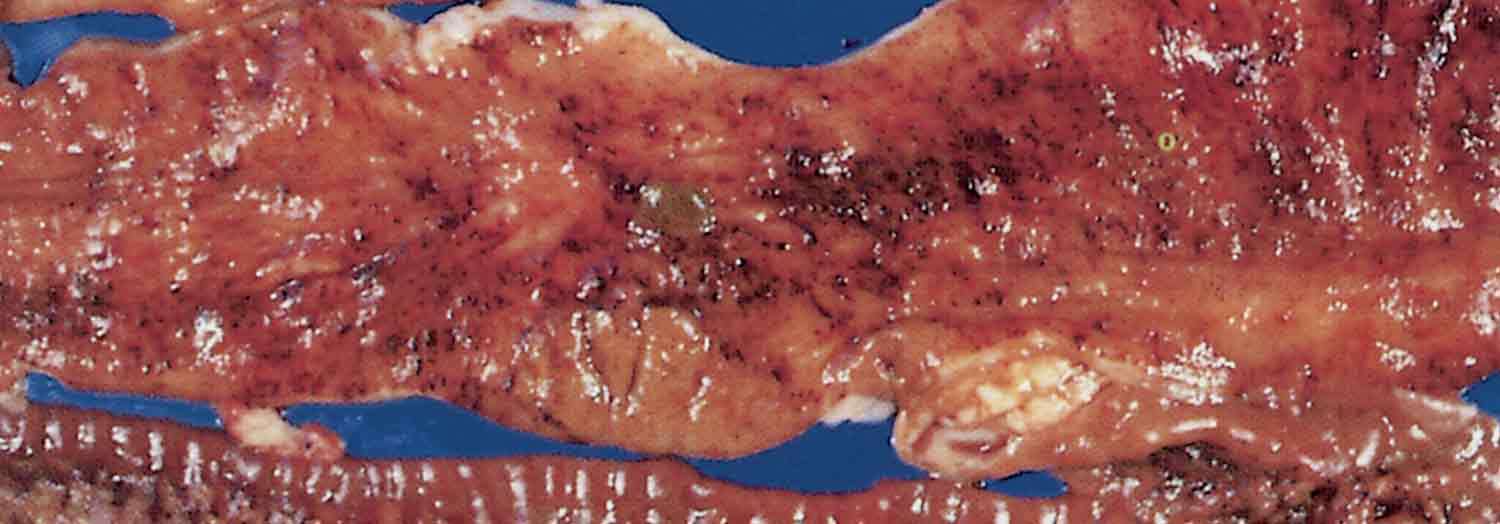
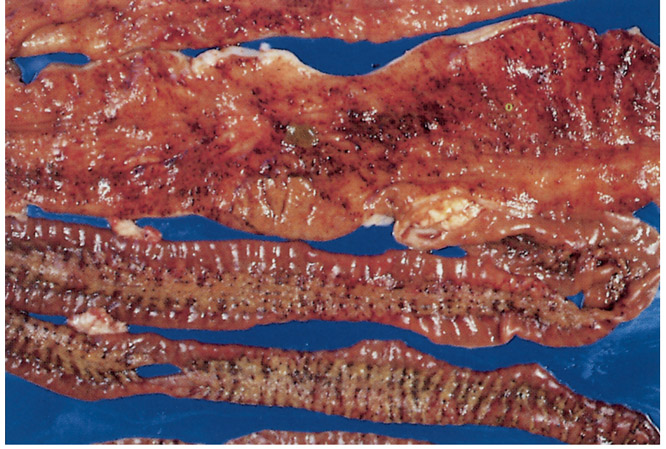
Congestion and haemorrhage of the mucosa of abomasum and the small intestine, a fibrinous to necrohaemorrhagic ileitis, typhlitis and colitis occur (Figures 152.1). Enlargement and oedema of the mesenteric lymph nodes are usually present.9, 19, 48, 58 The contents, particularly of the distal parts of the small intestine and the entire large intestine, are very watery and foul-smelling.9, 10, 19, 28, 43, 48, 49, 50 Subacute to chronic cases may show mucosal hyperplasia with nodular thickening in severe cases, especially in the caecum and colon.58
Microscopically, acute lesions are usually characterized by congestion, oedema, haemorrhage, degeneration and necrosis of the affected part of the intestinal mucosa, and in- filtration mainly of neutrophils but also of lymphocytes, plasma cells and macrophages into the lamina propria and submucosa. Fibrin thrombi may be present in submuco
Acute septicaemic cases may also show widespread disseminated intravascular coagulation in other major organs.58 Ewes that abort may reveal necropurulent metritis, blood-tinged pleural and peritoneal transudates, haemorrhagic enterocolitis and swollen, oedematous mesenteric lymph nodes. Aborted foetuses and membranes usually show minimal decomposition and no specific pathological changes.3, 13, 82 Microscopical changes within the placenta are characterized by necrosis with desquamation of epithelium in the allantochorion as well as infiltration of leukocytes and bacterial emboli.82 Infected lambs that die shortly after birth may present with pneumonia, gastroenteritis, enlarged mesenteric lymph nodes, and a clear to haemorrhagic, ventral, subcutaneous oedema, fibrinous peritonitis, arthritis, and foci of necrosis in the liver.3, 30
Diagnosis
Salmonellosis should be suspected in sheep or goats that develop fever, severe diarrhoea, and a necrohaemorrhagic ileitis, typhlitis and colitis of sudden onset following transportation or recent introduction into feedlots.9, 31, 43, 61, 54 In live animals, a diagnosis of salmonellosis is confirmed by the isolation of the bacteria from the faeces or from blood collected during the febrile phase of the disease.61 In animals that have died of the acute disease, salmonellas can be isolated from the liver, spleen, lungs and mesenteric lymph nodes regional to the affected parts of the intestinal tract.9 Samples for abortion investigation should include foetal liver or stomach contents, foetal membranes and uterine tissue from dead ewes. The detection of subclinical infections in individual sheep may constitute a problem as shedding of the bacteria in the faeces may be intermittent.9, 22, 61 The isolation of Salmonella serovars on a flock basis is, therefore, generally more successful. For the recovery of the bacteria from carriers after they have been slaughtered, cultures should be made of the gastrointestinal tract and its regional lymph nodes.
The methodology, laboratory isolation, and cultural procedures have been described in the introduction to Salmonella spp. infections. It must be remembered that exposure to heat, freezing or disinfectants reduces the viability of Salmonella serovars. It is important to use non-inhibitory enrichment media, or to add a factor, such as yeast extract, when frozen specimens are examined. Prolonged incubation is recommended for blood and bone marrow cultures.61 Serology is of limited value in the detection of previous infections.9, 61
Differential diagnosis
Infectious and non-infectious diseases which cause enteritis and diarrhoea should be distinguished from ovine and caprine salmonellosis.
In new-born and pre-weaned lambs, the most important conditions include colibacillosis due to enterotoxigenic strains of Escherichia coli, lamb dysentery caused by Clostridium perfringens type B, rota- and coronavirus infections, coccidiosis and verminosis. In weaned animals, yersiniosis caused by either Yersinia entrocolitica or Y. pseudotuberculosis is indistinguishable clinically from enteric salmonellosis. While not recognized in South Africa, yersiniosis is a problem in other major sheep-producing countries, including New Zealand and Australia.16 The diagnosis in each case should be confirmed by the isolation or identification of the causative agent from faeces and/or tissue specimens.6, 16 Plant poisonings caused by Ornithogalum spp. (chinkerinchee), Ornithoglossum spp. (slangkop) and Gnidia polycephala (Januariebos), and intoxication by the trichothecene mycotoxins may also be confused clinically with salmonellosis.37 A number of diseases, such as Q-fever, chlamydiosis, toxoplasmosis, Rift Valley fever, Wesselsbron disease, campylobacteriosis, yersiniosis and listeriosis cause abortion and neonatal death and should be considered in the differential diagnosis of ovine abortion caused by Salmonella serovars.
Control
Therapy with combinations of trimethoprim and sulphadiazine, or with members of the aminoglycoside group, such as gentamicin and neomycin, may be of value in reducing mortalities during an outbreak of salmonellosis in sheep. Oral treatment can effect clinical cure, but may cause rumen dysfunction.6 It is, however, doubtful whether antimicrobial therapy can eliminate salmonellas from the digestive tract of recovered animals in order to stop their excretion in the faeces.77 The performance of an antibiogram on isolates of salmonellas is imperative in order to formulate a strategy for the most effective form of antimicrobial treatment because drug-resistant strains of salmonellas have become an obstacle in the effective chemotherapy of the disease.59 These strains may infect humans via food. Such resistance can also be transferred to other Enterobacteriaceae in both in vitro and in vivo situations.14, 61, 78
Antimicrobial therapy is not always beneficial in the treatment of salmonellosis and other Gram-negative bacterial infections since destruction of these bacteria may result in the liberation of highly toxic lipopolysacchyrides which are then responsible for the endotoxin-mediated effects associated with them. Early treatment with cyclo-oxygenase inhibitors, such as indomethacin, aspirin and flunixin meglumine, counteract the detrimental effects of endo-toxin.7, 15, 18 Immunotherapy with polyvalent anti-lipopolysaccharide hyperimmune serum is a highly effective adjunct in the treatment of endotoxin-mediated diseases. Appropriate electrolyte and acid-base solutions should be administered. Digestive disturbances should be corrected with rumenotorics and other appropriate measures.
The crutch and tail should be washed with an insecticidal solution to prevent blowfly strike due to faecal soiling of these areas. A most important aspect in the control of salmonellosis in sheep and goats is the elimination or minimization of the predisposing stress factors. Where possible, sheep should be well fed on a good quality roughage, such as lucerne hay, in holding pens before they are subjected to a long journey. After the introduction of animals to a feedlot their dietary programme should provide roughage of good quality while the amount of concentrates fed should be gradually increased over a period. Scrupulous hygienic measures should be applied in transport vehicles, abattoir lairages, feedlots or wherever the congregation or temporary starvation of sheep is expected to occur.61 An all-in-all-out policy with sufficient time for cleaning and disinfection between different batches of sheep may be of great advantage in feedlots.
The isolation of scouring or moribound animals is imperative and the carcasses of dead sheep should either be incinerated or deeply buried to prevent contamination of the environment and attraction of scavenging animals. Feedstuffs of animal origin and organic fertilizers should be carefully screened in order to determine that they have not been contaminated with salmonellas as a result of ineffective processing or following recontamination during storage.In New Zealand, the use of a killed vaccine consisting of a combination of S. Typhimurium, S. Hindmarsh and S. Bovismorbificans, administered twice at an interval of four to six weeks, with the second vaccination given at least two weeks before the period of challenge, has been found to reduce mortalities due to salmonellosis in sheep on pastures.41, 61, 77Vaccination in the face of an outbreak is widely used and is believed to offer some protection in previously unvaccinated animals.29 Favourable results have also been obtained in South Africa after vaccination of lambs twice at an interval of 14 days with the Onderstepoort Inactivated Polyvalent Calf Paratyphoid Vaccine containing S. Typhimurium, S. Dublin and S. Bovismorbificans.48 Less promising results have been obtained following the use of the live gal-e mutant vaccine from Australia31 and the Onderstepoort Live Calf Paratyphoid Vaccine in South Africa.2, 48 Although live vaccines are more immunogenic, there is the potential risk of dissemination of the attenuated bacteria following their excretion in faeces or by contamination of meat and other foods.60
Human infections following contact with diarrhoeic animals are occasionally described. In the recent outbreak of S. Brandenburg abortions in New Zealand, at least 37 cases of human salmonellosis caused by the clonal strain of the organism were notified to the Ministry of Health.4 Those affected included farmers and their family members, farm workers and slaughterhouse workers, and promoted the issuing of a warning to humans of the risk of handling aborting or recently aborted animals or the products of abortion. Dogs and cattle were also affected in the outbreak and may have contributed to the spread of the agent to humans.
References
- ANON, 1978b–2001. Annual Reports, Veterinary Research Institute, Onderstepoort.
- ANON, 1997. Products Manual, Onderstepoort Biological Products.
- BAKER, J.R., FAULL, W.B. & RANKIN, J.E.F., 1971. An outbreak of salmonellosis in sheep. The Veterinary Record, 88, 270–277.
- BAKER, M., 1998. Salmonella Brandenburg in farmers follows epidemic among sheep. New Zealand Public Health Report, 5, 77.
- BELTON, D., 1993. Salmonellosis in New Zealand livestock. Surveillance, 20, 13–14.
- BLOOD, D.C., RADOSTITS, O.M. & HENDERSON, J.A., 1983. Veterinary Medicine, 6th edn. London: Baillière Tindall.
- BOTTOMS, G.D., TEMPLETON, C.B., FESSLER, J.F., JOHNSON, M.A. & ROESEL, O.F., 1982. Thromboxane, prostaglandin I2 epoprostenol and the hemodynamic changes in equine endotoxin shock. American Journal of Veterinary Research, 43, 999–1002.
- BOXALL, N., CLARK, G., GILL, J., ROE, A., SMART, J., TAYLOR, S., KENNINGTON, N., HIGGIN, Q., FENWICK, S. & PFEIFFER, D., 1999. Preliminary results from a survey of sheep farms affected by Salmonella Brandenburg. Proceedings from the 29th Seminar of the Society of Sheep and Beef Cattle Veterinarians, New Zealand Veterinary Association, Publication No. 189, 7–12.
- BROWN, D.D., ROSS, J.G. & SMITH, A.F., 1976. Experimental infections of sheep with Salmonella Typhimurium. Research in Veterinary Science, 21, 335–340.
- BULGIN, M.S. & ANDERSON, B.C., 1981. Salmonellosis in goats. Journal of the American Veterinary Medical Association, 178, 720–723.
- CLARK, G., FENWICK, S.G., BOXALL, N., SWANNEY, S., NICOL, C., 1999. Salmonella Brandenburg abortions in sheep, pathogenesis and pathology. Proceedings from the 29th Seminar of the Society of Sheep and Beef Cattle Veterinarians, New Zealand Veterinary Association, Publication No. 189, 13–22.
- DEMLING, R.H., SMITH, M., GUNTHER, R., FLYNN, J.T. & GEE, M.H., 1981. Pulmonary injury and prostaglandin production during endotoxaemia in conscious sheep. American Journal of Physiology, 240, 348–353.
- DENNIS, S.M. & ARMSTRONG, J.M., 1965. Ovine abortion due to Salmonella Typhimurium in Western Australia. Australian Veterinary Journal, 41, 178–181.
- DURAND, A.M., BARNARD, M.L., SWANEPOEL, M.L. & ENGELBRECHT, M.M., 1987. Resistance to various antibiotics of Salmonella and Escherichia coli isolates from registrable farm feeds. Onderstepoort Journal of Veterinary Research, 45, 21–26.
- EMAU, P., GIRI, S.N. & BRUSS, M.L., 1984. Role of prostaglandins, histamine and serotonin in the pathophysiology induced by Pasteurella haemolytica endotoxin in sheep. Circulatory Shock, 12, 47–59
- FENWICK, S.G., 1997. Domestic animals as potential sources of human Yersinia infection. Surveillance, 24, 3–5.
- FENWICK, S.G., 1999. Institute of Veterinary, Animal and Biomedical Sciences, Massey University, Palmerston North, New Zealand. Unpublished data.
- FLETCHER, J.R. & RAMWELL, P.W., 1977. Modification by aspirin and indomethacin of the hemodynamic and protaglandins releasing effects of E. coli endotoxin. British Journal of Pharmacology, 61, 175–181.
- GARDINER, M.R. & CRAIG, J., 1970. Factors affecting survival in the transportation of sheep by sea in the tropics and subtropics. Australian Veterinary Journal, 46, 65–69.
- GIANELLA, R.A., FORMAL, S.B., DAMMIN, G.J. & COLLINS, H., 1973. Pathogenesis of salmonellosis. The Journal of Clinical Investigation, 52, 441–453.
- GITTER, M. & SOJKA, W.J., 1970. Salmonella Dublin abortion in sheep. The Veterinary Record, 87, 775–778.
- GRAU, F.H., BROWNLIE, L.E. & SMITH, M.G., 1969. Effects of food intake on numbers of Salmonellae and Escherichia coli in rumen and faeces of sheep. Journal of Applied Bacteriology, 32, 112–117.
- GRAY, D.F., LEWIS, P.F. & GORRIE, C.J.R., 1958. Bone meal as a source of bovine salmonellosis. The Australian Veterinary Journal, 62, 345–351.
- HEMMINGSEN, P., MONTGOMERY, R.A., WARD, C.G. & HENDERSON, T.G., 1982. A fatal disease outbreak in sheep associated with Salmonella Enteritidis ser. Havana. New Zealand Veterinary Journal, 30, 98.
- HENNING, M.W., 1936. Salmonella Onderstepoort: A new type of Salmonella from a sheep. Journal of Hygiene, 36, 525–531.
- HENNING, M.W., 1956. Animal Diseases in South Africa. Pretoria: Central News Agency.
- HIGGS, A.R.B., NORRIS, R.T. & RICHARDS, R.B., 1993. Epidemiology of salmonellosis in the live sheep export industry. Australian Veterinary Journal, 70, 330–335.
- HINDMARSH, W.L., 1940. Dysentery in sheep due to Salmonella infection. The Australian Veterinary Journal, 16, 112–117.
- HUNTER, A.G., CORRIGALL, W., MATHIESON, A.O. & SCOTT, J.A., 1976. An outbreak of S. Typhimurium and its consequences. The Veterinary Record, 98, 126–130
- JACK, E.J., 1971. Salmonella abortion in sheep. Veterinary Annual, 12, 57–63.
- JELINEK, P.D., ROBERTSON, G.M. & MILLAR, C., 1982. Vaccination of sheep with a live gal-e mutant of Salmonella Typhimurium. Australian Veterinary Journal, 59, 31–32.
- JOSLAND, S.W., 1951. Survival of Salmonella Typhimurium on various substances under natural circumstances. Australian Veterinary Journal, 1, 264–266.
- JOSLAND, S.W., 1953. Observations on the aetiology of bovine and ovine salmonellosis in New Zealand. New Zealand Veterinary Journal, 1, 131–136
- JONES, G.W., RABERT, D.K., SVINARICH, D.M. & WHITFIELD, H.J., 1982. Association of adhesive, invasive and virulent phenomous 60-megadalton plasmids. Infection and Immunity, 38, 476–481.
- JONES, G.W. & RICHARDSON, L.A., 1981. The attachment to and invasion of HeLa cells by Salmonella Typhimurium. The contribution of mannose-sensitive and mannose-resistant hemagglutination activities. Journal of General Microbiology, 127, 361–370.
- KANE, D.W., 1979. The prevalence of Salmonella infection in sheep at slaughter. New Zealand Veterinary Journal, 27, 110–113.
- KELLERMAN, T.S., COETZER, J.A.W. & NAUDÉ, T.W., 1988. Plant Poisonings and Mycotoxicoses of Livestock in Southern Africa. Cape Town: Oxford University Press Southern Africa.
- KIDD, S., 1997. Report on Salmonella in livestock production. Epidemiology Department, Central Veterinary Laboratory, Ministry of Agriculture, Fisheries and Food, New Haw, Addlestone, Surrey KT15 3NB, U.K
- KOO, F.C.W., PETERSON, J.W. & HOUSTON, C.W., 1984. Pathogenesis of experimental salmonellosis. Inhibition of protein synthesis by cytotoxin. Infection and Immunity, 43, 93–100.
- LONG, J.R., FINLEY, G.G., CLARK, M.H. & REHMTULLA, A.J., 1978. Ovine fetal infection due to Salmonella Arizonae. Canadian Veterinary Journal, 19, 260–263.
- MAKELA, P., VALTONEN, V.V. & VALTONEN, M., 1973. Role of O-antigen (lipopolysaccharide) factors in the virulence of Salmonella. Journal of Infectious Diseases, 128, S81–S85.
- MARCHANT, R., 1999. Salmonella Brandenburg B the role of vaccination. Proceedings of the 29th Seminar of the Society of Sheep and Beef Cattle Veterinarians, New Zealand Veterinary Association, Publication No. 189, 29–33.
- MCCAUGHEY, W.J., KAVANAGH, P.J. & MCCLELLAND, T.G., 1971. Experimental Salmonella Dublin infection in sheep. British Veterinary Journal, 127, 557–566.
- MCORIST, S. & MILLER, G.T., 1981. Salmonellosis in transported feral goats. The Australian Veterinary Journal, 57, 389–390.
- MEYRICK, B. & BRIGHAM, K.L., 1983. Acute effects of Escherichia coli endotoxin on the pulmonary microcirculation of anesthetized sheep. Laboratory Investigation, 48, 458–470.
- MURRAY, M.J., 1986. Salmonella: Virulence factors and enteric salmonellosis. Journal of the American Veterinary Medical Association, 189, 145–147.
- NAKAMURA, M., SATO, S., OHYA, T., SUZUKI, S. & IKEDA, S., 1985. Possible relationship of a 36-megadalton Salmonella Enteritidis plasmid to virulence in mice. Infection and Immunity, 47, 831–833.
- NESER, J.A., 1988. Veterinary Research Institute, Onderstepoort. Unpublished data 1978–1988.
- NESER, J.A., CAMERON, C.M. & HENTON, M.M., 1984. Veterinary Research Institute, Onderstepoort. Unpublished data.
- NEWSOM, I.E. & CROSS, F., 1924. An outbreak of paratyphoid dysentery in lambs. Journal of the American Veterinary Medical Association, 66, 289–300.
- NEWSOM, I.E. & CROSS, F., 1935. Third outbreak of paratyphoid dysentery in lambs. Journal of the American Veterinary Medical Association, 86, 534–536.
- NOTTINGHAM, P.M., URSELMANN, A.J., 1961. Salmonella infections in calves and other animals. New Zealand Journal of Agricultural Research, 4, 449–460.
- OGONOWSKI, K., BARNARD, M.L. & GIESECKE, W.H., 1984. Bacteriological findings regarding the hygienic safety of poultry litter intended as an ingredient of feeds for ruminants. Onderstepoort Journal of Veterinary Research, 51, 249–252.
- ORR, M.B., HUNTER, A.R., BROWN, D.D. & SMITH, A.F., 1977. The histopathology of experimental infections of sheep with Salmonella Typhimurium. Veterinary Science Communications, 1, 191–195.
- PETRIE, L., SELMAN, I.E., GRINDLAY, M. & THOMPSON, H., 1977. Salmonellosis in young calves due to Salmonella Enteritidis. The Veterinary Record, 101, 398–402.
- PIERSON, R.E., PODUSKA, P.J., CHOLAS, G. & BROWN, G., 1972. Relationship of management and nutrition to salmonellosis in feedlot lambs. Journal of the American Veterinary Medical Association, 161, 1217–1220.
- REED, W.M., OLANDER, H.J. & THACKER, H.L., 1986. Studies on the pathogenesis of Salmonella Typhimurium and Salmonella Choleraesuis var. Kunzendorf infection in weanling pigs. American Journal of Veterinary Research, 47, 75–83
- RICHARDS, R.S., NORRIS, R.T. & HIGGS, A.R.B., 1993. Distribution of lesions in ovine salmonellosis. Australian Veterinary Journal, 70, 326–330.
- RIETSCHEL, E.T., SCHADE, U., JENSEN, M., WOLLENWEBER, H.W., LUDERITZ, O. & GREISMAN, S.G., 1982. Bacterial endotoxins: Chemical structure, biological activity and role in septicaemia. Scandinavian Journal of Infectious Diseases (Supplement), 31, 8–21.
- ROBINSON, A.A., 1966. Salmonella excretion by sheep following yarding. New Zealand Veterinary Journal, 125, 24–25.
- ROBINSON, R.A., 1970. Salmonella infection: Diagnosis and control (Review Article). New Zealand Veterinary Journal, 18, 259–277
- ROBINSON, R.A. & ROYAL, W.A., 1971. Field epizootiology of Salmonella infection in sheep. New Zealand Journal of Agricultural Research, 14, 442–456.
- ROE, A., 1999. Salmonella Brandenburg: A practitioner’s perspective. Proceedings of the 29th Seminar of the Society of Sheep and Beef Cattle Veterinarians, New Zealand Veterinary Association, Publication No. 189, 23–28.
- SALISBURY, R.M., 1958. Salmonella infections in animals and birds in New Zealand. The New Zealand Veterinary Journal, 6, 76–86.
- SHARP, J.C., REILLY, W.J., LINKLATER, K.A., INGLIS, D.M., JOHNSTON, W.S. & MILLER, J.K., 1983. Salmonella Montevideo infection in sheep and cattle in Scotland, 1970–1981. Journal of Hygiene, 90, 225–232
- SHEARER, G.C., 1957. An outbreak of abortion in ewes due to Salmonella Dublin. The Veterinary Record, 69, 693–695.
- SOJKA, W.J., WRAY, C., SHREEVE, J.E. & BELL, J.C., 1983. The incidence of Salmonella infection in sheep in England and Wales, 1975 to 1981. British Veterinary Journal, 139, 386–392.
- SMITH, B.P., HABASHA, F., REINA-GUERRA, M. & HARDY, B.S., 1979. Bovine salmonellosis: Experimental production and characterization of the disease in calves, using oral challenge with Salmonella Typhimurium. American Journal of Veterinary Research, 40, 1510–1513
- SMITH, H.W. & JONES, J.E., 1967. Observations on experimental oral infection with Salmonella Dublin in calves and Salmonella Choleraesuis in pigs. Journal of Pathology and Bacteriology, 93, 141–156.
- TANNOCK, G.W. & SMITH, J.M., 1971. A Salmonella carrier state of sheep following intranasal inoculation. Research in Veterinary Science, 12, 371–373.
- TERAKADO, N., SEKIZAKI, T., HASHIMOTO, K. & NAITOH, S., 1983. Correlation between the presence of a fifty-megadalton plasmid in Salmonella Dublin and virulence for mice. Infection and Immunity, 41, 443–444.
- THOMAS, G.W. & HARBOURNE, J.F., 1974. Experimental Salmonella Dublin infection in housed sheep. The Veterinary Record, 94, 414–417.
- VAN DEN HEEVER, L.W. & VAN DER MADE, H.N., 1977. The effect of sample size and culture method on the recovery of Salmonella spp. from naturally contaminated carcass meal. Journal of the South African Veterinary Association, 48, 51–52.
- VAN DER MADE, H.N., VAN STADEN, J.J., DE V., DU TOIT, J., JORDAAN, E., BARRETT, E.L. & COETZEE, J.D., 1980. Determination of the physiochemical and microbiological quality of carcass, bone and blood meal. Onderstepoort Journal of Veterinary Research, 47, 197–201.
- VAN DER WALT, K., JENKINS, W.L. & BOTES, H.J., 1967. The therapeutic control of calf paratyphoid (S. Dublin) infection. Journal of the South African Veterinary Medical Association, 38, 425–430.
- VODAS, K. & MARINOV, M.F., 1986. Role of rams in the epizootiology of Salmonella abortion in sheep. Vet Med Nauki, 23, 61–68.
- WALLACE, G.V. & MURCH, O., 1967. Field trials to assess the value of a bivalent killed Salmonella vaccine in the control of ovine salmonellosis. New Zealand Veterinary Journal, 15, 62–65.
- WALTON, J.R., 1968. Infectious drug resistance. The Veterinary Record, 82, 448–454.
- WATSON, W.A., 1960. Salmonella Dublin infection in a lambing flock. The Veterinary Record, 72, 62–65.
- WATTS, P.S. & WALL, M., 1952. The 1951 Salmonella Typhimurium epidemic in sheep in South Australia. The Australian Veterinary Journal, 28, 165–168.
- WEINSTEIN, D.L., CARSIOTIS, M., LISSNER, C.R. & O’BRIAN, A., 1984. Flagella help Salmonella Thyphimurium survive within murine macrophages. Infection and Immunity, 46, 819–825.
- WRAY, C. & LINKLATER, K.A., 2000. Salmonella infections in sheep. In: WRAY, C. & WRAY, A., (eds). Salmonella in Domestic Animals.Oxford: Cabi Publishing. pp. 209–218
- WRAY, C. & SOJKA, W.J., 1978. Experimental Salmonella Typhimurium infection in calves. Research in Veterinary Science, 25, 139–143.